

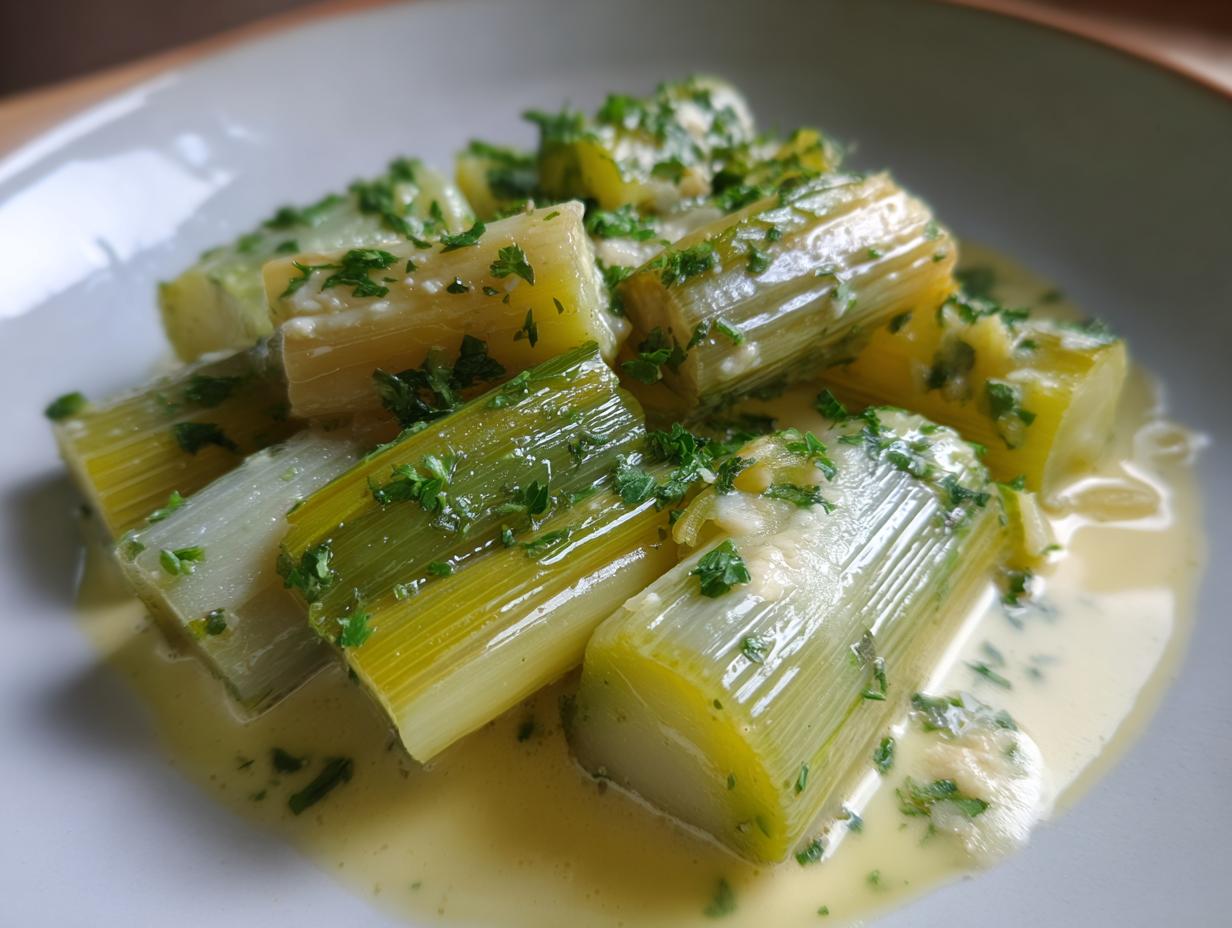
There’s nothing quite like a vegetable that melts right on your tongue, don’t you think? It feels so luxurious, yet it can come from the simplest ingredients. When I was trying to bring more warmth from my old family kitchen back into my hectic city life, I wasn’t looking for complicated meals; I was craving that feeling of honest, high-quality flavor. That’s how I rediscovered the magic of **braised leeks**. This French-Style preparation, especially when finished with a savory white wine sauce, instantly elevates any plate. It proves that sometimes the most elegant dishes are the most straightforward, relying on technique rather than fussy additions. Trust me, once you nail the texture on these, they’ll become your go-to gourmet side dish!
- Why You Will Love This Easy Side Dish Recipe for Braised Leeks
- Essential Ingredients for Classic French-Style Braised Leeks
- How to Properly Clean Leeks: A Key Step for Tender Braised Vegetables
- Step-by-Step Instructions for Perfect Braised Leeks
- Ingredient Notes and Variations for Your Braised Leeks
- Tips for Success: Achieving Gourmet Side Dishes
- Serving Suggestions for These Elegant Vegetable Side Dishes
- Storage and Reheating Instructions for Leftover Braised Leeks
- Frequently Asked Questions About Braised Leeks
Why You Will Love This Easy Side Dish Recipe for Braised Leeks
I get it, life is busy, and sometimes you want something that tastes like you spent all afternoon fussing over it, but you just don’t have the hours. That’s what I love about this version of **braised leeks**—it delivers that impressive, restaurant-quality result without demanding your entire evening! This recipe is my favorite kind because it ticks all the boxes for reliable home cooking.
Here is why I promise this will become a repeat player on your dinner rotation:
- It’s Surprisingly Quick: Seriously, the active cooking time for these vegetables is less than 40 minutes total. That makes it such an **easy side dish recipe** when you’re aiming for something special but need to get dinner on the table fast.
- The Texture is Everything: We aren’t aiming for crunchy; we want that perfect, melt-in-your-mouth velvetiness. The slow braise in the broth and wine ensures the leeks become incredibly sweet and tender. It’s pure comfort food, elevated.
- Pure French Elegance: This preparation is rooted in classic **French vegetable preparations**. The white wine and Dijon mustard finish gives it a bright, sophisticated flavor that feels totally gourmet. It looks beautiful piled high on a platter, too!
- It Pairs Beautifully: Because the flavor profile is so clean and savory, it’s incredibly versatile. It complements everything from simple roasted chicken to big holiday roasts. You can find more classic pairing ideas over at Taste This Plate if you need inspiration!
Essential Ingredients for Classic French-Style Braised Leeks
When you’re going for that buttery, tender texture that makes **braised leeks** so memorable, you can’t skimp on quality, but you also don’t need a pantry full of exotic items. Most of this stuff you probably have already! I made sure this ingredient list was straightforward because the flavor really comes from the slow cooking process, not from complicated spices.
You’ll need four good, large leeks—and this is important—we are only using the white and light green sections. The tough, dark tops just don’t soften enough, so save those for stock! Also, make sure you have proper salt and pepper; those are non-negotiable for finishing vegetables correctly.
Here’s the rundown of what you’ll grab from the pantry for the main braise:
- Four large leeks, making sure to use only the white and light green parts.
- Two tablespoons of unsalted butter—real butter makes a difference!
- One tablespoon of olive oil to help prevent the butter from burning.
- Two shallots, finely minced. They are milder than onions and give a better flavor base.
- Two cloves of garlic, minced super fine so they melt right into the sauce.
- Half a cup of whatever dry white wine you have on hand—nothing fancy, just something you’d be willing to drink!
- Half a cup of broth; I use chicken broth, but vegetable broth works great if you’re leaning toward vegetarian.
- A quarter cup of nice, heavy cream for that luxurious finish.
- One teaspoon of Dijon mustard—this is key for cutting the richness!
- Salt and freshly ground black pepper, of course.
- Fresh parsley, chopped up small for garnish when we’re done.
I know some of you might be wondering about swaps, especially if you can’t find shallots or need to avoid dairy. Don’t worry! We cover all those necessary adjustments a bit later on, but for the classic French approach, these ingredients create that perfect pairing for your **braised leeks**.
Making the White Wine Butter Sauce for Your Braised Leeks
The sauce is what takes these vegetables from “nice side dish” to “absolutely show-stopping main event.” A true French preparation leans toward something like a beurre blanc, and we get that beautiful bright, tangy depth right here in the pot. The white wine is crucial because when it reduces, it concentrates its flavor, stripping away any harsh alcohol taste and leaving behind that wonderful acidic backbone.
The heavy cream and that little teaspoon of Dijon mustard are what bring it all together into a silky emulsion. The Dijon doesn’t make it taste mustardy; instead, it acts like a stabilizer, helping the fat and liquid marry perfectly without breaking. It’s this combination—wine reduction plus cream richness—that really defines excellent **braised leeks** finished in a butter sauce.
How to Properly Clean Leeks: A Key Step for Tender Braised Vegetables
Okay, let’s talk about the dirtiest secret in the vegetable world: leeks are infamous for hiding sand and grit deep inside their layers. If you skip this part when preparing your **braised leeks**, I promise you’ll end up with a sandy texture that totally ruins that beautiful, melt-in-your-mouth tenderness we are aiming for. We need to be thorough here!
When I first tried cooking leeks years ago, I just rinsed them under the tap, and oh boy, was that a mistake. I ended up chewing through tiny bits of grit the whole meal. Now I follow the soaking method I learned from my mom, and it works perfectly every single time. It really is the best way to approach **how to cook leeks** for gentle cooking methods like braising.
Here is the only way I trust to clean them before we start cooking:
- Trim! First, you absolutely must trim off those dark green tops—they are too tough for this recipe. Then, slice off the little root hairs at the bottom end.
- Slice Them Open: Take your leeks and slice them right down the middle, lengthwise, from the tip almost all the way to where the white part meets the root structure.
- The Soak: Fill a big bowl—the biggest one you have!—with cold water. Drop those halved leeks into the bowl, making sure all the layers are submerged.
- Swish and Agitate: This is the magic part! Vigorously swish the leeks around with your hands for a good minute or two. You should see tiny bits of dirt start to cloud the water. Let them sit for about five minutes so anything heavy sinks to the bottom.
- Lift, Don’t Pour: This is the most important tip! Do NOT pour the whole bowl into a colander. Why? Because all that grit you just shook loose will pour right back over your beautiful leeks! Instead, use tongs or your hands to gently lift the leeks *out* of the water and move them to a clean colander.
- Rinse and Dry: Give the leeks one final quick rinse under running water just to be safe, and then pat them really dry. Excess water will steam the leeks instead of allowing them to gently caramelize, which messes up the final texture of your **tender braised vegetables**.
I saw a great video on this technique recently that really shows how effective the soaking is; you can check it out if you want a visual reminder here: Feasting at Home has a perfect little tutorial on this step.
If you skip this washing process, your **braised leeks** will never achieve that divine, melt-in-your-mouth texture we’re seeking. We want silk, not sand, friends!
Step-by-Step Instructions for Perfect Braised Leeks
Now that we have our leeks sparkling clean—which, honestly, is half the battle won—we get to the fun part: turning them into a beautifully flavored, tender side dish. I’m going to walk you through this exactly as I do it. Remember, this is a gentle process. We aren’t rushing these guys; we’re coaxing the sweetness out of them low and slow. Following these steps ensures your **braised leeks** come out silky smooth and swimming in just the right amount of rich sauce.
Sautéing and Building Flavor in Your Slow Cooked Leek Recipe
This initial step is where we start building that deep, savory base for our **slow cooked leek recipe**. Grab that heavy-bottomed pot or Dutch oven—the heavy bottom prevents scorching, which is important when dealing with dairy and sugar!
- First, you want to melt your butter right along with that olive oil over medium heat. Using both gives you the flavor of butter but the higher smoke point of the oil.
- Toss in all those clean, two-inch leek pieces. Now, don’t touch them immediately! Let them sit for about 5 minutes to start softening up. Then, stir occasionally for another 5 to 10 minutes. You are looking for them to get soft and start getting just a *hint* of light golden color around the edges. That light caramelization is pure flavor gold!
- Once they are softened, throw in your minced shallots and garlic. Give those two-minute stir until the kitchen smells amazing! Seriously, that garlic hitting the butter is one of the best smells ever.
We aren’t trying to brown the shallots and garlic, just wake them up a bit before we move to the liquid step!
Braising and Finishing the Leeks in Cream Sauce
This is where that French flair really comes into play. We introduce the wine, let it do its job, and then we let the leeks turn impossibly tender.
- Pour in your half-cup of dry white wine. Use your wooden spoon to scrape up all those tasty little brown bits stuck to the bottom of the pot—that’s called the *fond*, and it’s packed with flavor. Let this bubble away until the liquid reduces by about half; that should take around three minutes.
- Now, add your broth. Bring the whole thing up to a gentle simmer, cover the pot tightly, and drop the heat down to low. Let this covered cooking happen for 20 to 25 minutes. You’ll know they are ready when you can poke a piece with a fork and it practically falls apart.
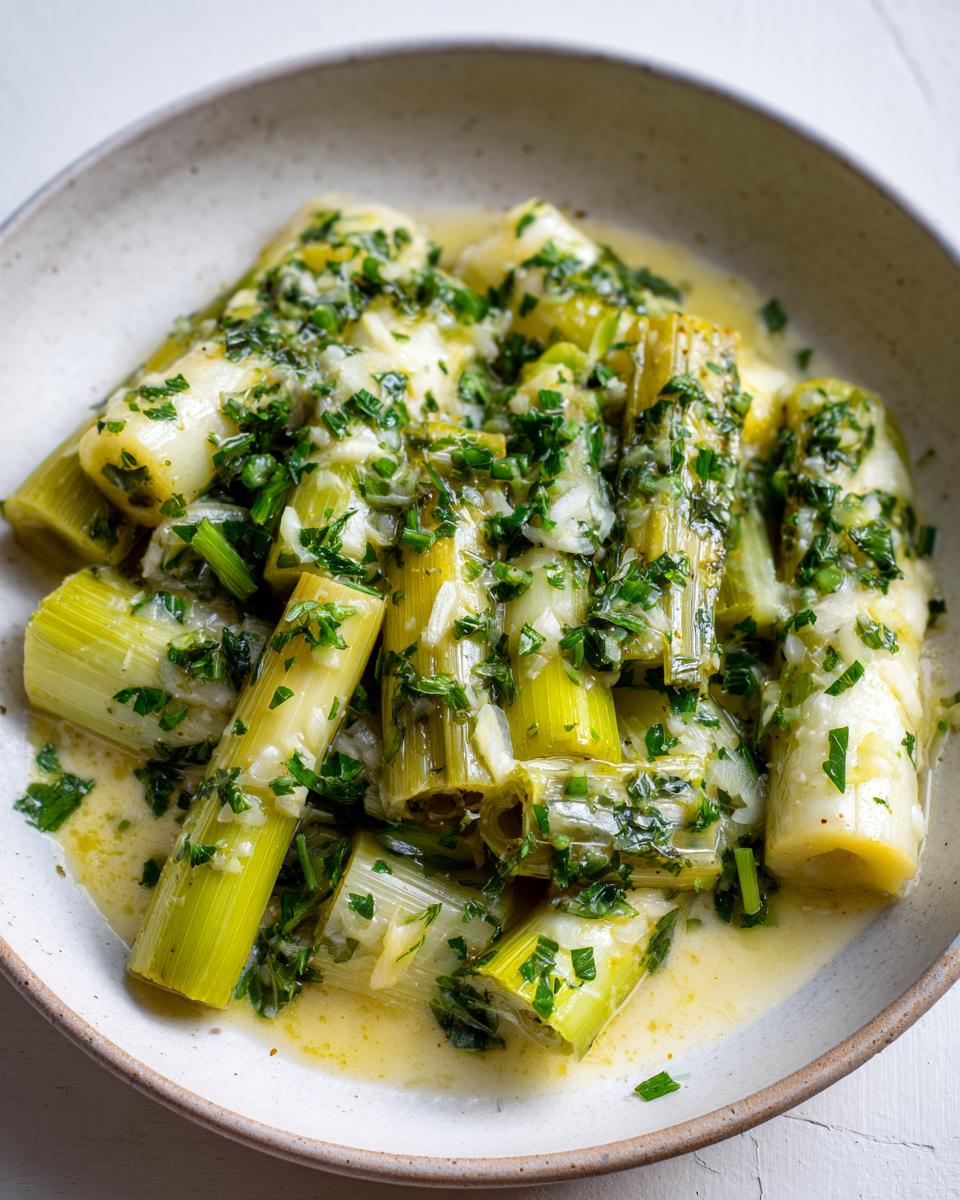
- Once they are tender, take the lid off. Gently stir in your heavy cream and that Dijon mustard. Let this simmer uncovered for about five minutes. The goal here is just to let the liquid cook down slightly and thicken into a beautiful sauce. Crucial warning: Do not boil rapidly at this stage! If you boil too hard, the cream can split, and we want silky smooth **leeks in cream sauce**, not grainy sauce!
- Finally, taste it! This is when you season generously with salt and pepper. Leeks soak up so much seasoning, so don’t be shy.
Serve them up immediately while they are piping hot and garnish with that fresh parsley. The contrast of the bright green against the creamy sauce is just gorgeous!
Ingredient Notes and Variations for Your Braised Leeks
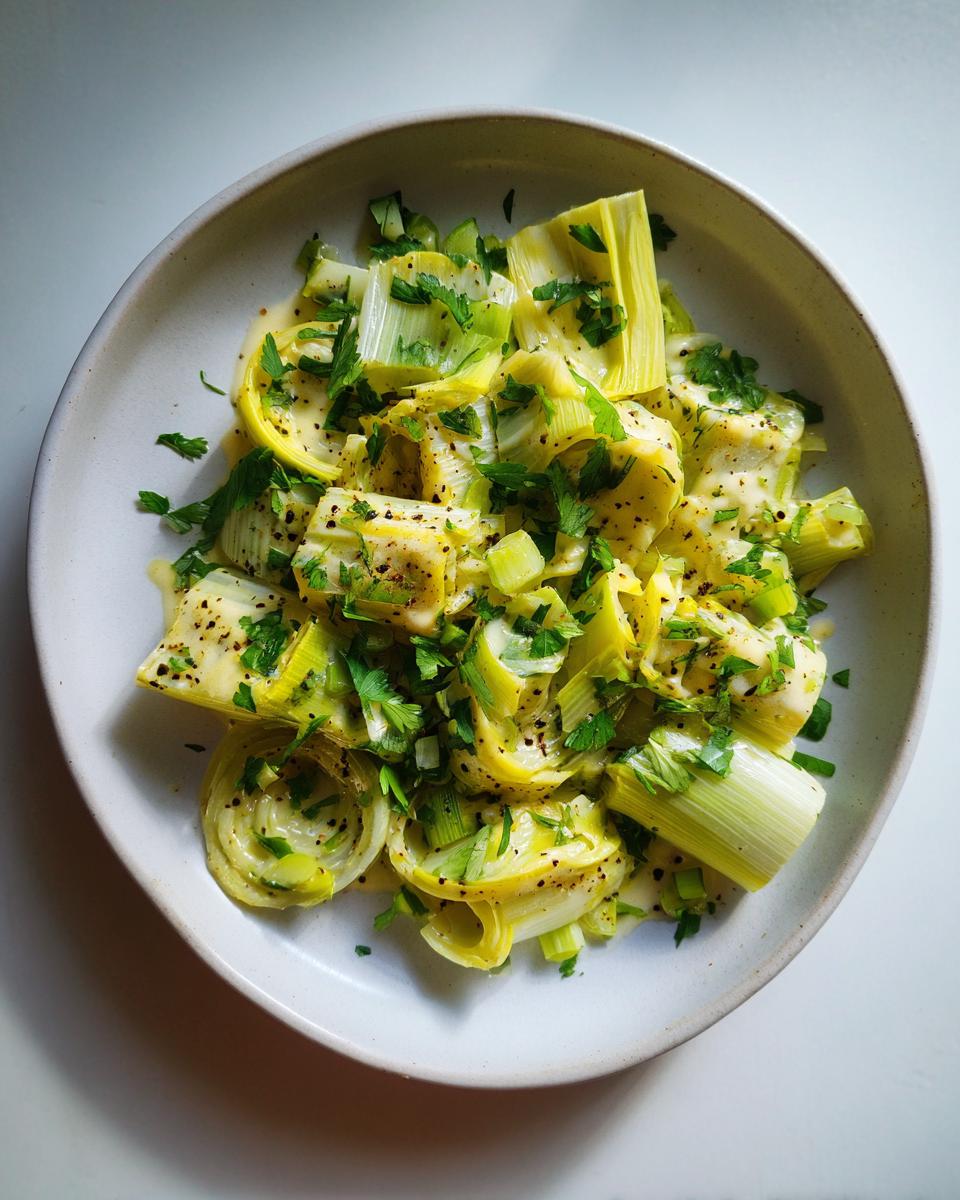
One of the things I love most about mastering **braised leeks**—or any really good, simple vegetable preparation—is seeing how adaptable the technique is. We focused on the classic French execution here because it’s divine, but I always want my recipes to serve everyone, no matter their pantry situation or dietary needs. This dish is such a fantastic foundation for other flavors, too!
When you’re serving this as an elegant vegetable side dish, what are you pairing it with? These savory, creamy leeks are stunning next to something rich like roasted beef or maybe my recipe for Apple Cider Braised Pork Shoulder. The acidity and sweetness of the pork cut right through the richness of the white wine sauce we made. It’s just a perfect balance!
But let’s talk about those necessary swaps, because I know how often we have to pivot away from dairy or meat-based broths. Good news: this recipe handles substitutions like a champ, allowing you to create incredible gluten free vegetable sides or completely plant-based versions without sacrificing that signature tenderness.
Making Vegan Braised Leeks
If you need to make vegan braised leeks, it’s surprisingly simple, and the result is still fantastic. The main goal is replacing the fats and the broth, but maintaining that creamy mouthfeel. Honestly, good quality vegan butter these days tastes just like the real thing, so your initial sauté will be seamless!
Here are the easy swaps you’ll make:
- Butter Swap: Use an equal amount of high-quality vegan butter sticks instead of dairy butter. Make sure whatever you buy is good for cooking, not just texture.
- Broth Swap: Simply use vegetable broth instead of chicken broth. Make sure it’s a low-sodium one if possible, so you have more control over the final saltiness.
- Cream Swap: This one can be tricky if you pick the wrong kind! You need a thick, unsweetened plant-based cream. Full-fat coconut milk (the canned kind, just the cream part scooped from the top if it has separated) works wonderfully, or you can use commercial oat or cashew creamer designed for coffee or cooking.
For the absolute best fully vegan version that mimics that classic French flavor, I always recommend checking out Camilla’s recipe for French-Style Braised Leeks. She has tested numerous plant milks, and her directions are spot-on for keeping that sauce rich and delicious!
Tips for Success: Achieving Gourmet Side Dishes
Even though this recipe is straightforward, doing a few things perfectly ensures that this vegetable side dish moves from just being nice to being truly unforgettable. When you’re aiming for that gourmet feel, it’s all about the details you spend those extra 30 seconds on. I learned these little tricks I had the hard way, so you don’t have to!
Here are my top three non-negotiables for nailing the silky texture every time:
- Be Patient with the Softening Stage: Don’t crank the heat up too high in that initial sauté! If the leeks start turning brown quickly, you’re sautéing, not softening. We need them to release their inner sugars gently over that medium-low heat first—aim for 8 to 10 minutes of gentle stirring until they are noticeably floppy and translucent before you add the aromatics.
- Master the Scrape (Get that Fond!): When you add that white wine, you absolutely must scrape up every single bit of goodness stuck to the bottom of your pot. That browned stuff, the fond, is pure concentrated flavor from the butter and the leeks. If you leave it stuck down there, you’re tossing out a huge flavor component. It’s one of the easiest ways to add depth to any sauce.
- The Tender Test is Everything: When we say “very tender,” we mean it dissolves when you press it. If a toothpick meets resistance, it’s not done braising. Put the lid back on for another 5 minutes. Overcooked is better than undercooked when it comes to achieving that melt-in-your-mouth effect. If you want to see how to make other incredible creamy sauces, check out my recipe for Garlic Aioli—the principles of emulsion are similar!
If you follow those three checkpoints, you’ll have the perfect base for whatever sauce you decide to finish with, whether it’s this white wine version or something completely different next time around!
Serving Suggestions for These Elegant Vegetable Side Dishes
So, you’ve mastered the **braised leeks** and you have this incredible, rich sauce simmering in the bottom of your pot. Awesome! Now comes the fun part: figuring out what star protein deserves to share the plate with such a gorgeous vegetable. Because this dish is rooted in classic French vegetable preparations, it just screams “special occasion,” but honestly, I think simple weeknight meals deserve a little luxury too!
The key to pairing is balancing the richness of the cream and butter sauce. Since these leeks are so tender and savory, they need something that can stand up to that flavor without getting lost. They are the perfect vehicle for absorbing jus or pan drippings, too!
When I make these for a weekend dinner, here are the combos I always fall back on:
- Roasted Poultry or Pork: A simple, beautifully roasted chicken or pork loin is truly elevated by this side. When you pour the pan juices—even if they are just light ones—over the meat and get a little drippings mixed into the leeks, it’s heavenly. If you’re looking for an easy weeknight roast, try my Sheet Pan Mediterranean Chicken; the brightness of the lemon works so well with the savory leeks without being overwhelming.
- Seared Scallops or White Fish: For something a little lighter, like pan-seared scallops or a flaky piece of halibut, the creamy sauce acts almost like a light sauce replacement for the fish itself. It’s elegant, simple, and feels really gourmet.
- Steak Night Upgrade: If you’re preparing a good ribeye or filet mignon, forget the regular mashed potatoes and serve these instead! The subtle onion flavor of the leeks complements red meat beautifully. If you want a full French experience, you absolutely must check out how Momsavor pairs their version with a classic pan sauce—it’s simply divine!
Think of these **braised leeks** as the sophisticated foil to whatever main course you choose. They require very little effort but deliver maximum impact, making them one of my favorite **gourmet side dishes** to serve when impressing guests!
Storage and Reheating Instructions for Leftover Braised Leeks
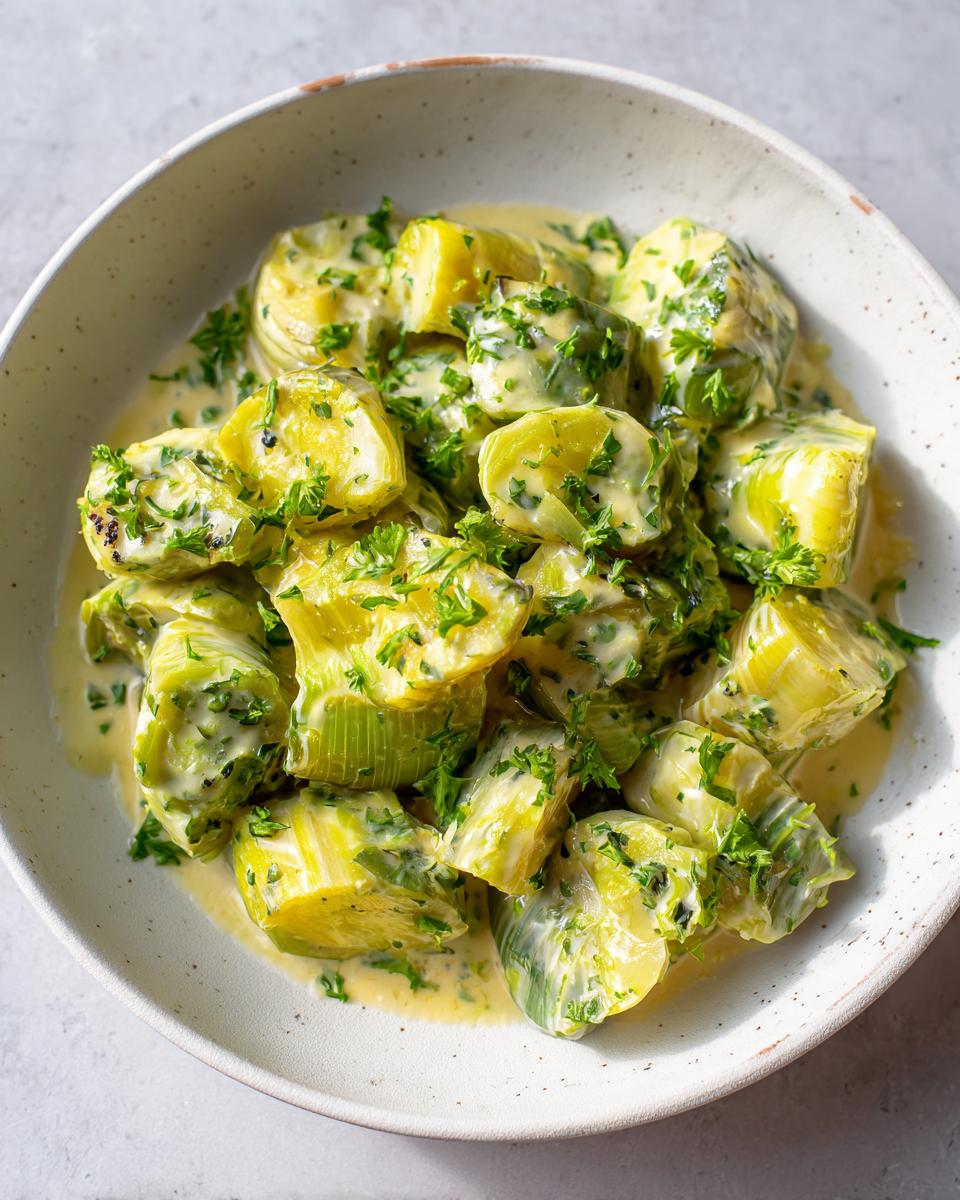
Honestly, I’m always thrilled when I have leftovers of these **braised leeks** because I find they taste even better the next day! Once the flavors have had time to quiet down overnight and really meld together with that white wine sauce, they become even richer. But, we have to treat them gently when reheating them, especially since we cooked them down to that perfect, tender state.
If you’ve made a large batch, storing them properly is key to maintaining that exquisite melt-in-your-mouth texture. I always aim to cool them down quickly after cooking before putting them away. This is just basic food safety, but it’s super important if you want to enjoy those leftovers later!
Here’s the best way to handle your pot:
- In the Fridge: Pop the leeks and any remaining sauce into an airtight container. They will keep beautifully in the refrigerator for about three to four days. Honestly, they hold up so well!
- Freezing? Maybe Not: I generally advise against freezing these. The cream and butter sauce tends to separate when thawed, and the leeks themselves can get a bit mushy after being frozen and thawed, costing you that perfect texture we worked so hard to achieve. Stick to the fridge for quick use!
Now, let’s talk about reheating because this makes or breaks the experience.
Gently Warming Up Your Leftover Braised Leeks
You need low, slow heat here. Resist the urge to blast them in the microwave, or you’ll end up with hot spots and possibly curdled sauce!
The absolute best method is warming them slowly, covered, in a saucepan over very low heat. You are basically just giving them enough warmth to come back up to temperature slowly. Add a tiny splash of water or extra broth if the sauce looks like it has thickened up too much while sitting in the fridge—this will loosen it right back up.
If you absolutely must use the microwave (I get it, sometimes the stovetop is too much effort!), put them in a microwave-safe dish, cover it loosely with a damp paper towel, and heat in short 30-second bursts. Stir well between each burst. This steam helps keep the leeks from drying out on the edges while the center warms up. Always check them frequently so you don’t overcook those tender vegetables!
Frequently Asked Questions About Braised Leeks
I always end up getting flooded with questions once readers try out this recipe because, while it’s simple, there are a few specifics about the French technique that are important! Don’t worry if you’re navigating kitchen creativity; I’ve tried to answer the most common things I hear about making these French vegetable preparations shine.
Can I make this an easy side dish recipe without wine?
Yes, you absolutely can! I call this necessary adaptation for those who need an alcohol-free option. If you skip the wine entirely—remember, where we deglaze the pot—you are losing that nice acidic punch that cuts through the richness of our cream and butter sauce. To compensate, you can simply use the same amount of extra vegetable or chicken broth!
But here’s my real pro-tip if you want that brightness back: add about a teaspoon of apple cider vinegar or a splash of white wine vinegar right when you add the broth. That little bit of acid mimics the wine perfectly and keeps this from tasting too heavy. It’s still a fantastic, easy side dish recipe, just without the grape notes!
What is the best way to braise leeks for a velvety texture?
The velvety texture—that’s the goal! That signature melt-in-your-mouth feeling doesn’t come from high heat; it comes from patience and steam. The best way to achieve this is by ensuring two things during that covered cooking phase (Step 4 in the instructions): low heat and adequate liquid coverage.
First, keep the heat barely above a simmer—you want tiny, lazy bubbles, not a rolling boil. Second, make sure the liquid level comes at least halfway up the sides of the leeks when you put the lid on. If you don’t have enough liquid, the tops will dry out before the bottoms are tender. If you’re struggling to keep the liquid up, just add a tablespoon of water or broth every 10 minutes. This slow, steamy journey is what breaks down the fibers and creates that perfect silkiness. This technique is also why these are so wonderful as winter vegetable recipes when you’re looking for cozy, tender comfort foods!
If you’re looking for some quicker options for busy nights that still get great flavor, you can check out my guide on quick weeknight dinners for inspiration!
Print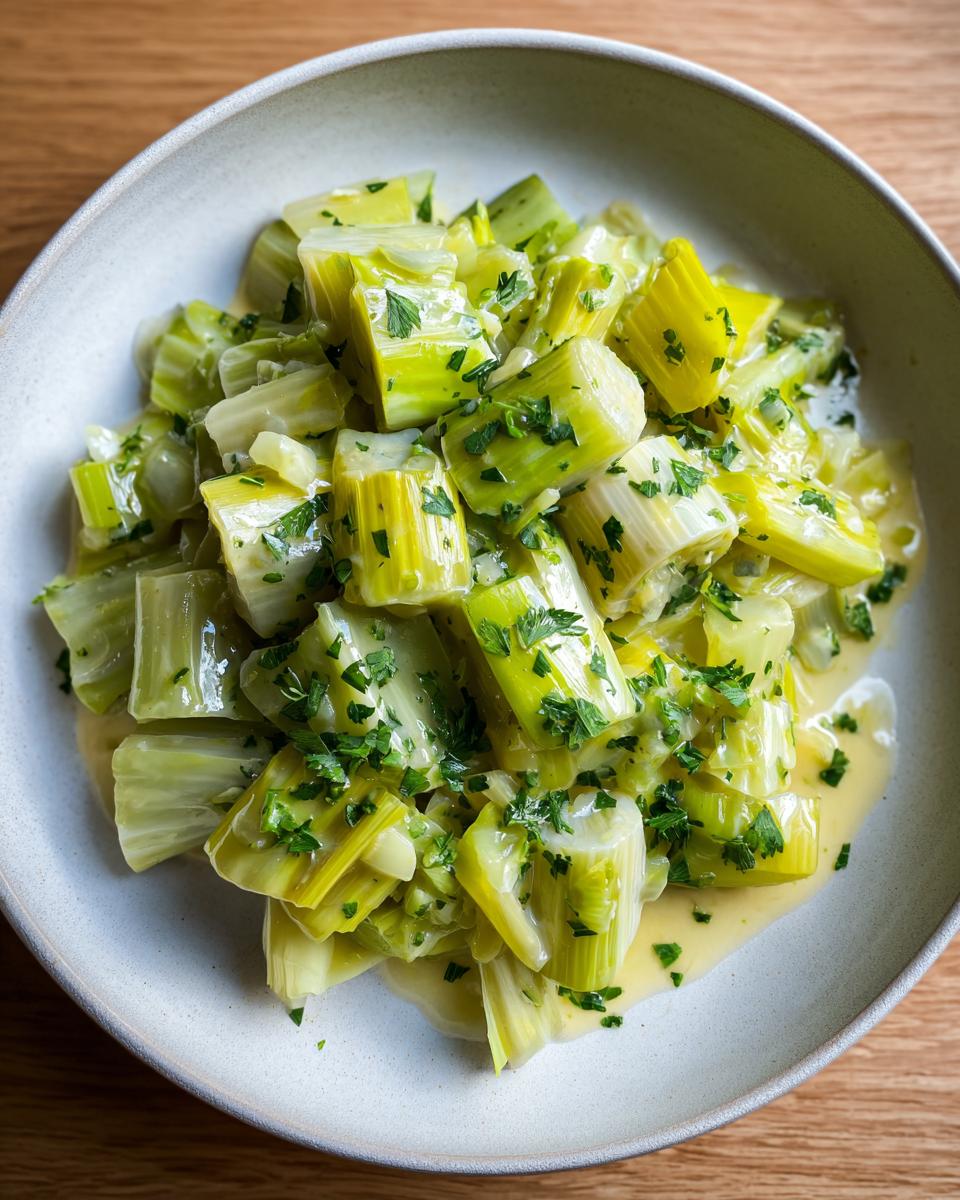
Elegant French-Style Braised Leeks with White Wine Butter Sauce

Make tender, melt-in-your-mouth braised leeks with this easy French-style recipe. You will finish them with a light, savory white wine butter sauce, making this an outstanding side dish for any special dinner.
- Prep Time: 15 min
- Cook Time: 40 min
- Total Time: 55 min
- Yield: 4 servings 1x
- Category: Side Dish
- Method: Braising
- Cuisine: French
- Diet: Vegetarian
Ingredients
- 4 large leeks, white and light green parts only
- 2 tablespoons unsalted butter
- 1 tablespoon olive oil
- 2 shallots, minced
- 2 cloves garlic, minced
- 1/2 cup dry white wine
- 1/2 cup chicken or vegetable broth
- 1/4 cup heavy cream
- 1 teaspoon Dijon mustard
- Salt and freshly ground black pepper to taste
- Fresh parsley, chopped, for garnish
Instructions
- Prepare the leeks: Trim off the dark green tops and the root ends. Slice the white and light green parts lengthwise. Place the leeks in a large bowl of cold water and swish them around to remove all grit. Lift the leeks out of the water, rinse them under running water, and pat them dry. Cut the leeks into 2-inch pieces.
- In a large, heavy-bottomed pot or Dutch oven, melt the butter with the olive oil over medium heat.
- Add the prepared leeks and cook, stirring occasionally, for 8 to 10 minutes until they begin to soften and lightly caramelize.
- Add the minced shallots and garlic. Cook for 2 minutes until fragrant.
- Pour in the white wine and scrape up any browned bits from the bottom of the pot. Let the wine reduce by half, about 3 minutes.
- Add the broth. Bring the mixture to a simmer, then reduce the heat to low, cover the pot, and cook for 20 to 25 minutes, or until the leeks are very tender.
- Remove the lid. Stir in the heavy cream and Dijon mustard. Simmer gently, uncovered, for 5 minutes, allowing the sauce to thicken slightly. Do not boil rapidly.
- Season the braised leeks generously with salt and pepper.
- Serve immediately, garnished with fresh chopped parsley. This is a gourmet side dish perfect for holiday side ideas.
Notes
- To clean leeks properly, soak them in water to release trapped dirt, then lift them out rather than pouring them through a colander.
- For a vegan braised leeks option, substitute the butter with vegan butter and use vegetable broth and a non-dairy cream alternative.
- This recipe creates tender braised vegetables that pair well with roasted chicken or steak.
Nutrition
- Serving Size: 1 serving
- Calories: 180
- Sugar: 4
- Sodium: 250
- Fat: 15
- Saturated Fat: 9
- Unsaturated Fat: 6
- Trans Fat: 0
- Carbohydrates: 9
- Fiber: 3
- Protein: 3
- Cholesterol: 45