

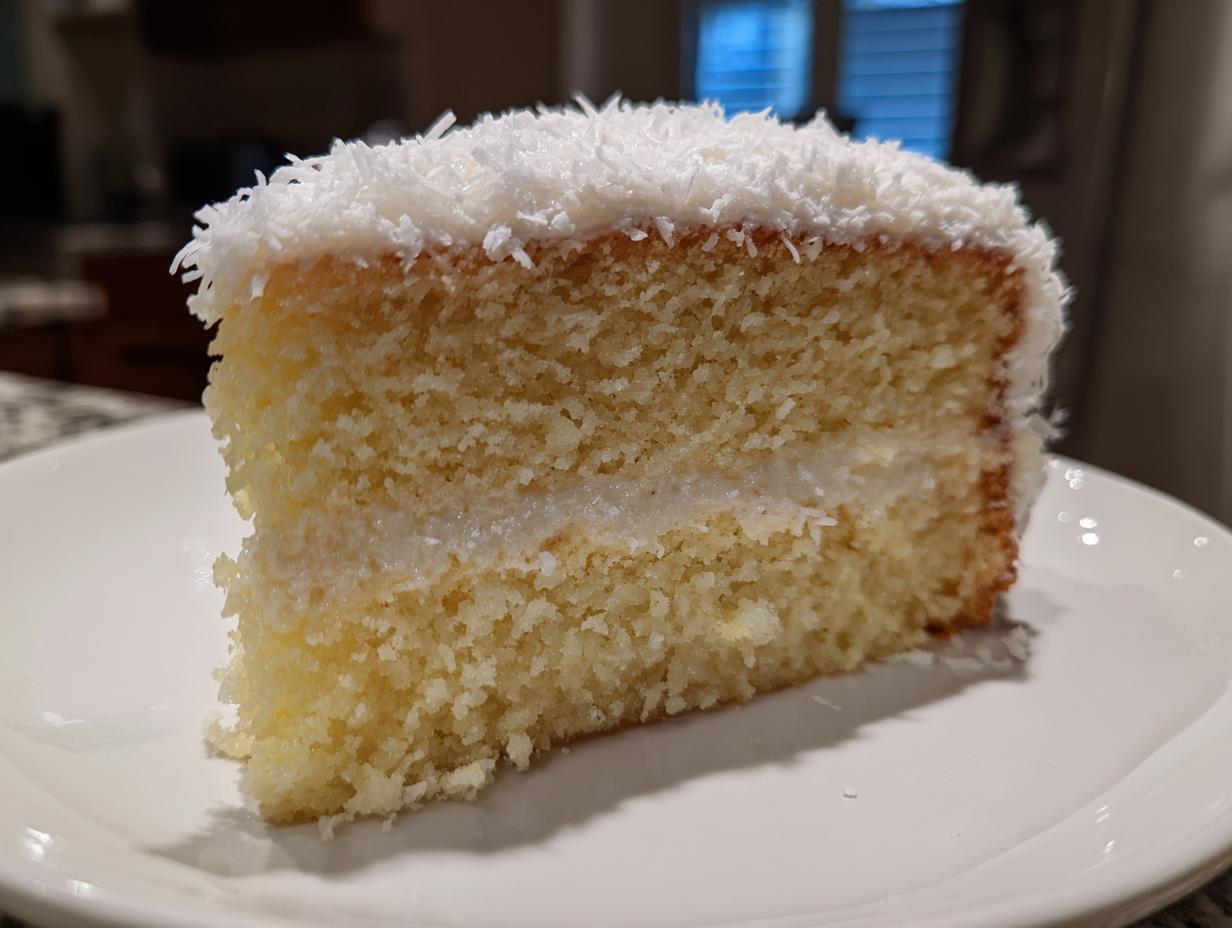
Oh, if you could just smell my kitchen right now! There is nothing, and I mean *nothing*, like biting into a slice of true Southern cake—the kind that collapses perfectly under the weight of the fork. Forget those dry, crumbly versions you sometimes find; this coconut cake recipe is my absolute gold standard for achieving that melt-in-your-mouth, fluffy layer texture every single time. Coming from a background rooted deeply in heritage cooking, I get so excited sharing recipes that take me right back to my grandmother’s table. We are making the definitive, from-scratch Southern Coconut Cream Layer Cake here, and trust me, the technique we use guarantees moistness and a tender crumb that rivals any bakery. This is the cake you save for the big moments. If you love a great frosting accompaniment, you absolutely have to check out my thoughts on cream cheese frosting pairings later on!
- Why This Southern coconut cake recipe is Your New Go-To
- Gathering Ingredients for the Ultimate coconut cake recipe
- Step-by-Step Instructions: How to Make coconut cake
- Frosting and Finishing Touches for Your coconut cake recipe
- Tips for a Perfect Southern coconut cake
- Variations on the Classic coconut cake recipe
- Storage and Serving Suggestions for Your Holiday coconut cake
- Frequently Asked Questions About This Coconut Dessert Recipe
- Nutritional Snapshot of This Decadent coconut cake
- Share Your Experience Baking This Cake
- Nutritional Snapshot of This Decadent coconut cake
- Share Your Experience Baking This Cake
Why This Southern coconut cake recipe is Your New Go-To
I’m telling you upfront, this isn’t just any cake; this is the one you brag about. People always ask me how I get that signature soft texture, and it comes down to a few deliberate Southern techniques. If you’re looking for a truly Moist coconut cake recipe that tastes like it came from a high-end bakery, you’ve found it. We skip the shortcuts here because the payoff is incredible.
- It delivers genuine Bakery style coconut cake quality right in a home oven.
- The layers stay unbelievably tender days after baking thanks to a little secret step I share below!
- It’s rich, full of coconut flavor without being heavy or gummy.
If you are looking for more amazing cakes that impress, check out my roundup of delicious dessert recipes.
Achieving the Perfect Tender coconut cake Layers
The secret to those perfect tender coconut cake layers isn’t just the ingredients themselves, though we use the best ones! It’s how we bring them together. We take our time creaming that butter and sugar—getting lots of air in there is non-negotiable for fluffiness. Plus, balancing the wet ingredients, especially using that cream of coconut, ensures the crumb stays delicate beneath all that frosting. It’s about mixing just until combined; overmixing is the enemy of tenderness!
Flavor Depth: Toasting Coconut for Your coconut cake recipe
Okay, this step gets skipped far too often, and honestly, it makes the difference between a good cake and a show-stopping Decadent coconut cake. You absolutely must toast your flaked coconut! When you give those flakes a quick visit to the oven, their natural oils bloom, deepening their flavor profile. Instead of a flat, sugary taste, you get this warm, nutty, almost caramelized coconut flavor weaving through every bite. It’s simple, but trust me on this one; the effort is worth the reward!
Gathering Ingredients for the Ultimate coconut cake recipe
Getting ready to bake means we need to organize! If you’ve ever tried to bake something special and realized halfway through you’re missing a key ingredient, I know that frustration. That’s why I am super detailed here. For this amazing coconut cake recipe, we aren’t using any fancy, hard-to-find mixes; we’re doing this the proper, trusted way. Before you even preheat your oven, lay everything out. It makes the whole process so much smoother, and that’s exactly what we want when aiming for an easy coconut cake from scratch!
If you need a refresher on quick baking staples, I sometimes refer back to my notes on things like great bread additions just to make sure I have pantry necessities stocked!
Cake Batter Ingredients for this Easy coconut cake from scratch
For absolute success in getting those fluffy layers, measure precisely. We need the right balance between the dry structure and the rich, wet flavor components. Here’s what you’ll need for the cake itself. Remember, the butter needs to be truly softened—not melted! That aeration matters.
- 1 3/4 cups all-purpose flour
- 1 3/4 cups granulated sugar
- 1 tablespoon baking powder
- 1/2 teaspoon salt
- 1 cup unsalted butter, softened
- 4 large eggs
- 1 cup whole milk
- 1 teaspoon vanilla extract
- 1/2 cup cream of coconut (like Coco Lopez) – this is key for that tropical richness!
- 1 cup sweetened flaked coconut, toasted (don’t forget to toast these first!)
- 1/2 cup unsweetened shredded coconut (we save this for the final coating)
Simple Syrup Components for a Moist coconut cake recipe
This is my non-negotiable step for getting that signature “soak” that keeps the cake moist for days—it’s essential for any great Moist coconut cake recipe. Once the cakes come out of the oven, we drench them slightly. Don’t skip this! It adds sweetness right into the crumb itself.
You only need two simple things for this:
- 1 cup powdered sugar
- 1/4 cup water
We just warm these gently until the sugar melts away. Simple, but totally necessary for a stunning finished product!
Step-by-Step Instructions: How to Make coconut cake
Alright, let’s roll up our sleeves because this is where the magic happens! Measuring is done, pans are ready, and all our ingredients are waiting patiently. Remember what I said about rushing? We are going to resist that urge! When making a superior cake like this, timing and how you handle the batter are everything. I promise, if you follow these steps exactly, you’ll end up with the prettiest, most fragrant layers you’ve ever seen. I swear, the smell when this bakes—it’s pure celebration!
First things first: get that oven warmed up to 350 degrees F. And please, take the time to grease and flour those three 8-inch pans. Then, cut out those little parchment paper rounds for the bottom. That extra step saves you heartbreak later when releasing your Fluffy coconut layer cake layers. Don’t skip it!
Mixing the Fluffy coconut layer cake Batter
We are following the classic cream method here for structure. Start by whisking your dry ingredients—flour, sugar, leavening, salt—right in your big bowl. Then, toss in that softened butter and mix it on low speed until it looks like—and stick with me here—coarse, wet sand. That’s the ‘coarse crumbs’ stage, and it means air is getting trapped in there perfectly!
Now, we introduce the wet stuff slowly—the eggs whisked with milk, vanilla, and that secret weapon, the cream of coconut. Add the wet mixture a little at a time while you mix on medium speed. Listen, this is crucial: Stop mixing as soon as the streaks disappear to keep your layers tender. As soon as you can barely see any dry flour streaks left, switch off the mixer and gently fold in your toasted coconut by hand with a spatula. We are building tenderness, avoiding toughness!
Baking and Syrup Application for the Best homemade coconut cake
Divide that smooth batter evenly into your prepared pans—use a kitchen scale if you want them perfectly even, but eyeballing it is fine for home baking! Bake them for about 25 to 30 minutes. Stick that wooden pick in the middle; if it comes out clean, they’re done! Don’t let them go too long, or they dry out.
While the cakes are cooling slightly in the pans (about 10 minutes), get your simple syrup warmed up until the sugar dissolves. This is how we guarantee a Moist coconut cake recipe! Take a skewer or a thick toothpick and poke holes all over the top surface of each warm layer. Brush that warm syrup over the tops evenly. Let them sit on the racks until they are totally cool to the touch before you even think about moving on to frosting. It lets that sugary goodness seep all the way down.
Speaking of frosting, if you are looking for the perfect partner for this tropical beauty, you simply must check out my recipe for the best coconut cream cheese frosting!
Frosting and Finishing Touches for Your coconut cake recipe
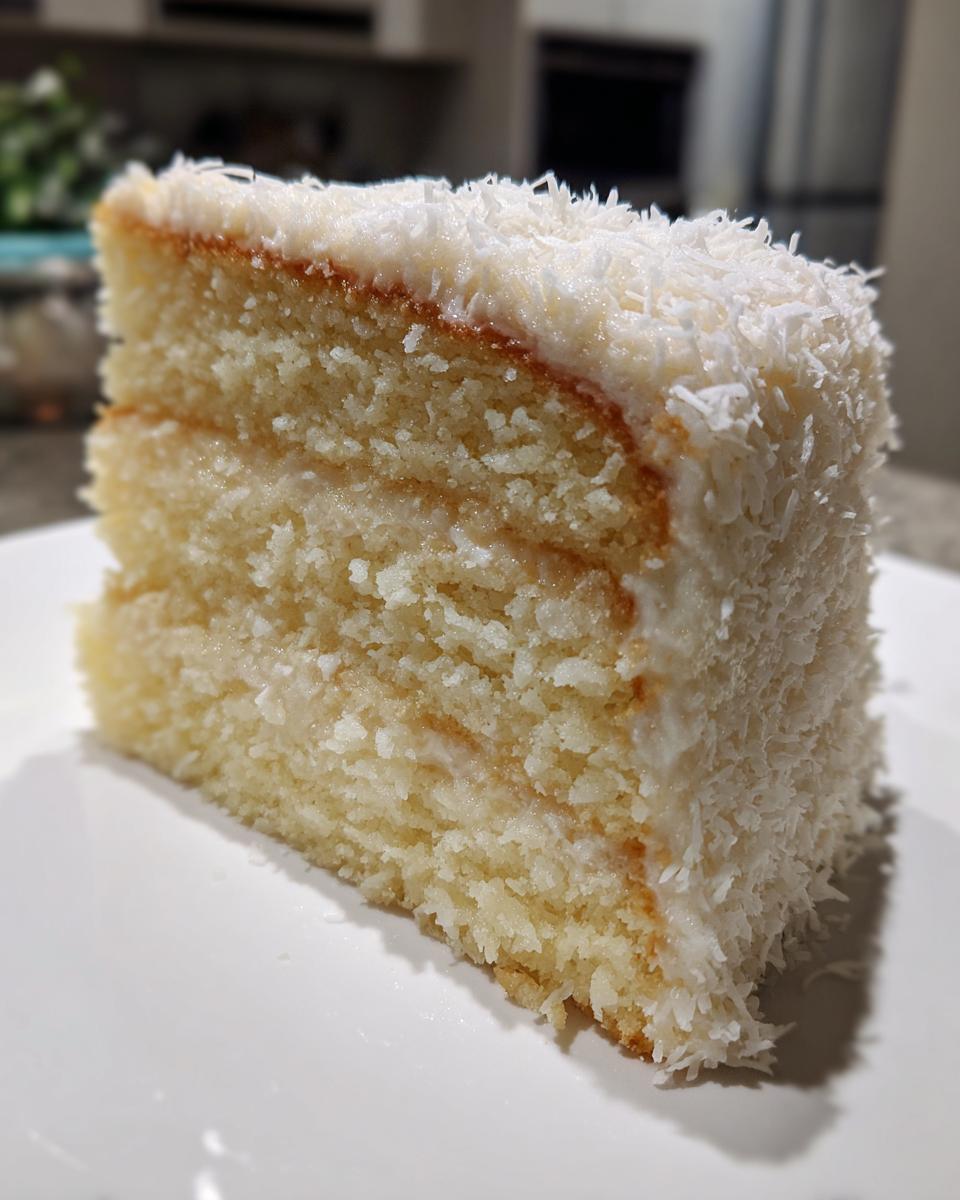
Now that we have these beautifully soaked, delicate layers, we get to the *fun* part—making it look like that incredible Bakery style coconut cake you see in the window! Remember, we only move on to the frosting stage once those layers are completely, totally cool. If you try to put a thick layer of frosting on a warm cake, you’ll end up with a messy, sliding disaster, and nobody wants that heartbreak after all this work. Patience pays off!
If you are using a slightly softer frosting, like a homemade coconut cream base, you might want to do a crumb coat first. That’s just a very thin layer of frosting that seals in any loose crumbs. Chill it for 15 minutes, and then come back for the grand finale coat. My favorite pairing, if you haven’t planned yours yet, is that rich, slightly tangy frosting over this sweet cake. You absolutely have to see the details on how I make it work in my Coconut Cream Cheese Frosting Recipe.
Assembling the Fluffy coconut layer cake
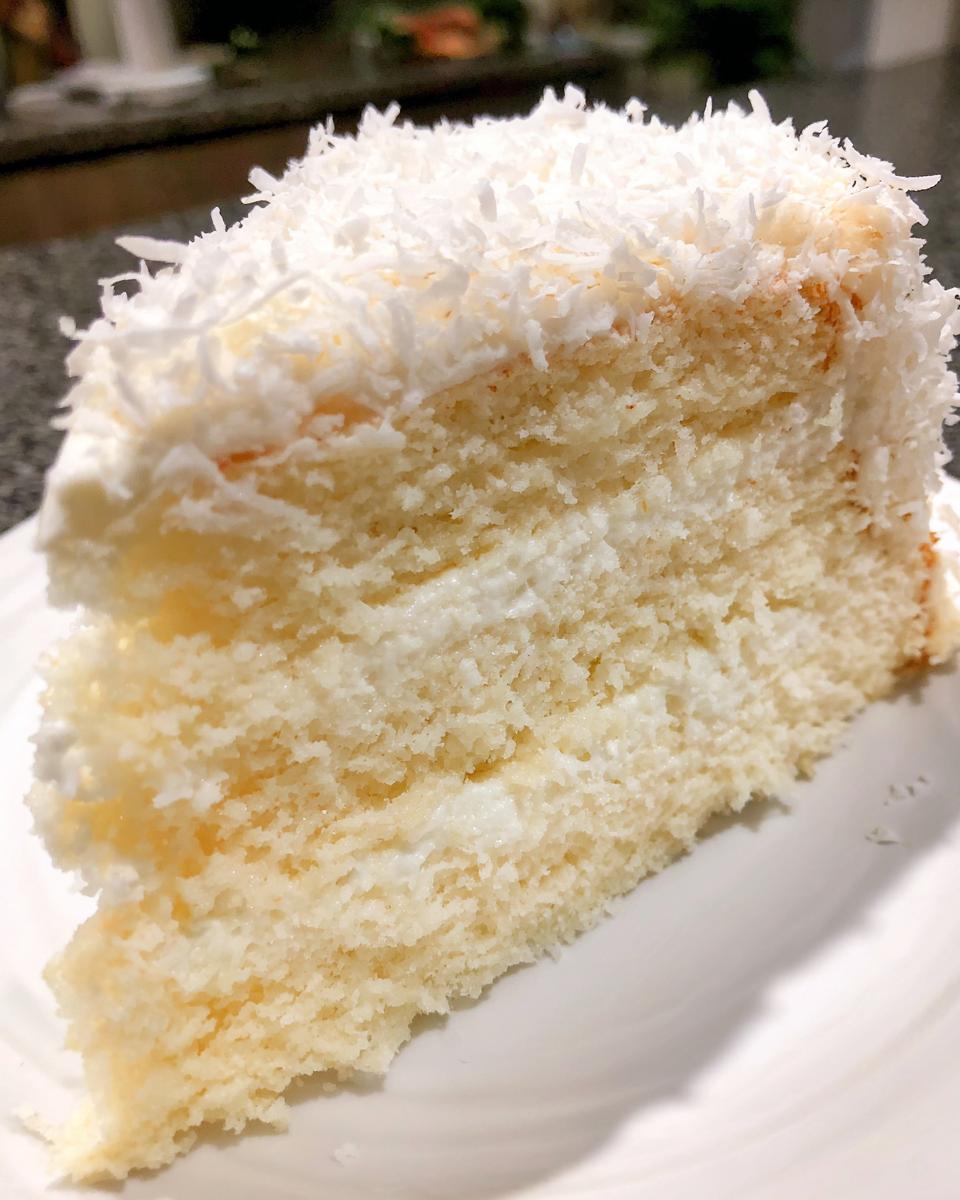
When assembling your Fluffy coconut layer cake layers, be gentle! These cakes are tender because we treated them well during mixing, so they need gentle handling now. Place your first layer down, top it with frosting—I usually use about a cup per layer, spreading it right to the edge. Then, carefully set the next layer on top, pressing very lightly just to seat it.
Once the entire cake is frosted with your final, beautiful thick layer of icing, it’s time for the coconut exterior. Take that reserved unsweetened shredded coconut and gently press it all over the sides. I find the easiest way to do the sides is to place the cake on a cake turntable (if you have one!) and just press handfuls against the frosting as it turns. For the very top, just sprinkle it evenly. That snowy white look against the pale cake is just stunning, and it’s the perfect finish for our stellar coconut cake recipe.
Tips for a Perfect Southern coconut cake
Even when you follow a recipe to the letter, sometimes those little variables in the kitchen can throw you off! Since this is a beloved Southern coconut cake recipe, I want to pass along the extra wisdom I’ve glean from years of baking it. These little tweaks, which often didn’t even make it onto Grandma’s main recipe card, guarantee that ‘wow’ factor and keep the cake exactly as it should be: super moist and fragrant. We want everyone thinking you bought this masterpiece from a specialty baker!
The Secret Power of Toasting Coconut
I mentioned it before, but let’s really dive into why toasting matters for a truly Moist coconut cake recipe. When you spread that handful of sweetened flaked coconut onto a baking sheet and pop it in a 350-degree oven for just a few minutes—watch it like a hawk, because it burns fast!—you are taking the flavor from 5 out of 10 to easily an 11 out of 10. It deepens the flavor exponentially. It transforms the sweetness into something richer, almost nutty. If you have leftover toasted coconut, keep it in an airtight jar; it’s divine sprinkled over yogurt or ice cream too!
Why Buttermilk is Your Friend Here
The recipe calls for whole milk because, honestly, it’s a classic ingredient that balances the richness of the butter and cream of coconut perfectly. However, if you want to push that tenderness just a tiny bit further, try substituting that whole milk with buttermilk. Buttermilk has a natural acidity that reacts beautifully with the baking powder, giving you an even finer crumb structure. It also adds the slightest tang that cuts through the richness, making the cake feel lighter. If you’re feeling adventurous and want that extra something special in your layers, go for the buttermilk upgrade!
Don’t Rush the Syrup Soak
When we brush that simple syrup over the warm layers, it’s tempting to rush the process and move right into frosting. Resist! The syrup needs time to soak deep into the crumb. If you frost too quickly, the excess liquid sits on the surface and can sometimes compromise the frosting texture, especially if you are using a meringue or a very soft cream. I usually let the layers cool completely after the syrup application—ideally an hour on the rack—before I even consider stacking them. That waiting game is how you secure an incredibly tender coconut cake layers that stays that way for days.
If you need a quick refresher on how to handle your dry ingredients when scaling up or down, remember all my mixing tips are outlined in my guide on making this easy coconut cake from scratch. Happy baking!
Variations on the Classic coconut cake recipe
Now, this is my favorite part of any great recipe—seeing how creative you all get! While the Southern layer cake version I gave you is truly magnificent for birthdays and celebrations—perfect for a big Holiday coconut cake moment—I know sometimes you need something a little different. Maybe you don’t want to stack layers, or perhaps you just want a different tropical twist. That’s totally okay! This batter is incredibly versatile. We can easily morph it into other incredible coconut dessert recipes.
If you’re interested in something a little more decadent with a chocolate element, you absolutely have to check out my thoughts on a White Chocolate Coconut Cake. It’s decadent, sweet perfection!
Making a Tropical coconut cake Bundt Version
So many people ask if they can take this fluffy layer cake batter and pour it right into a pretty Bundt pan, maybe even aiming for something close to the famous Tom Cruise cake! The answer is yes, you totally can transform this into a gorgeous Coconut Bundt cake!
The only real adjustment you have to make is the baking time, and this is important. Because the heat has to travel further into the middle of that thick Bundt structure, your baking time will increase substantially compared to the thinner layer pans. When you use the instructions provided for checking doneness, you’ll likely need closer to 50 or 60 minutes, depending on your pan size and the depth of the batter. Just remember the rule: test often, but don’t open the oven constantly! Slow and low usually wins with Bundts.
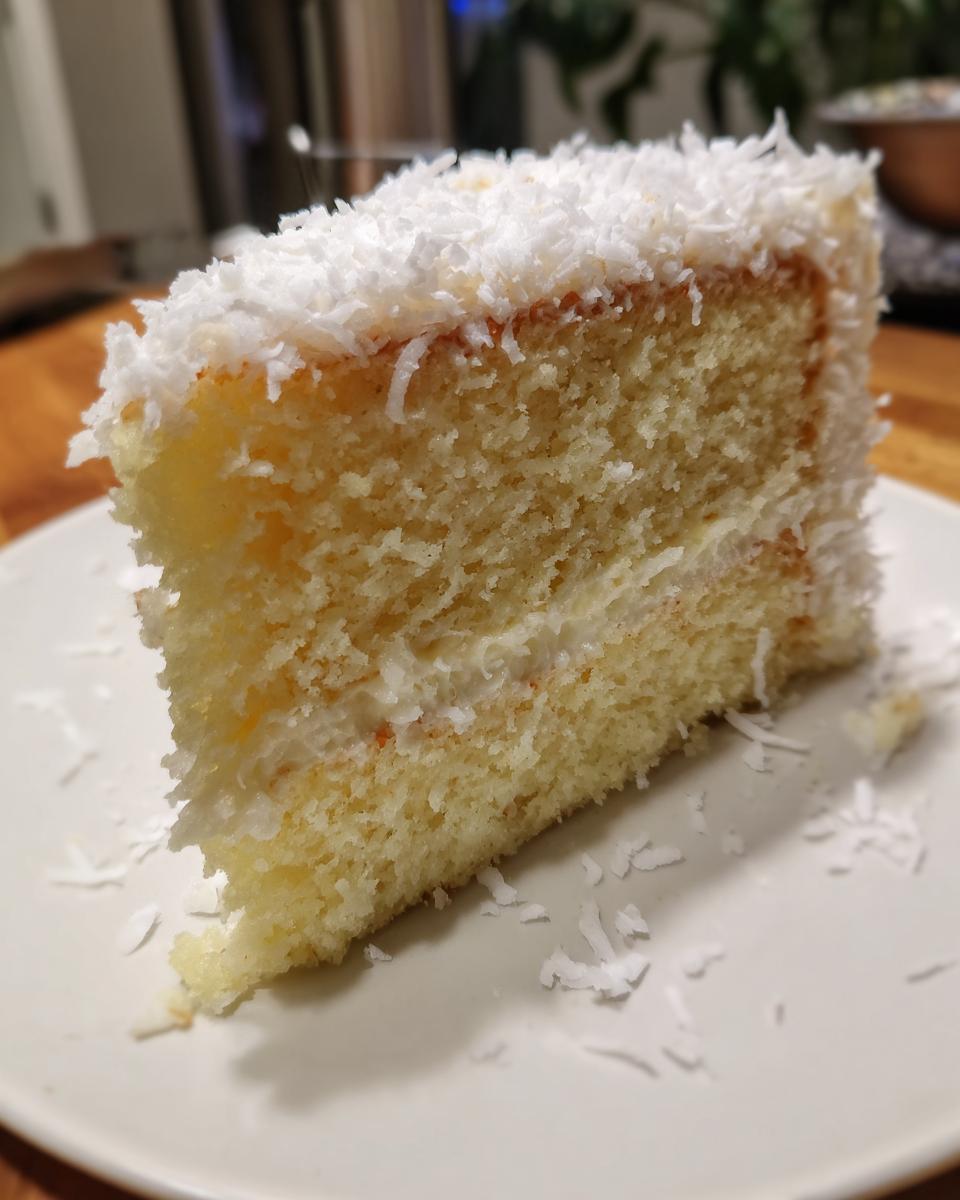
Another fun variation many of you enjoy is turning this into a simpler, gooey surprise. If you want something super easy for an informal dessert night, check out my notes on making a Coconut Poke Cake recipe next time you’re craving something fast!
Storage and Serving Suggestions for Your Holiday coconut cake
Since we put so much effort into making this cake perfectly moist with that simple syrup soak, we have to store it right so it tastes just as amazing the next day! If you’ve already frosted it with cream cheese frosting, you’ll want to keep it covered tightly in the refrigerator. But here’s a little secret: if you haven’t frosted those layers yet, you can wrap them tightly in plastic wrap and they’ll be perfectly fresh for up to two days at room temperature. I often bake the layers the day before a big party!
When it comes to serving this beautiful Holiday coconut cake, it shines the brightest when it’s just slightly cool, not ice-cold from the fridge. Let it sit on the counter for about an hour before slicing.
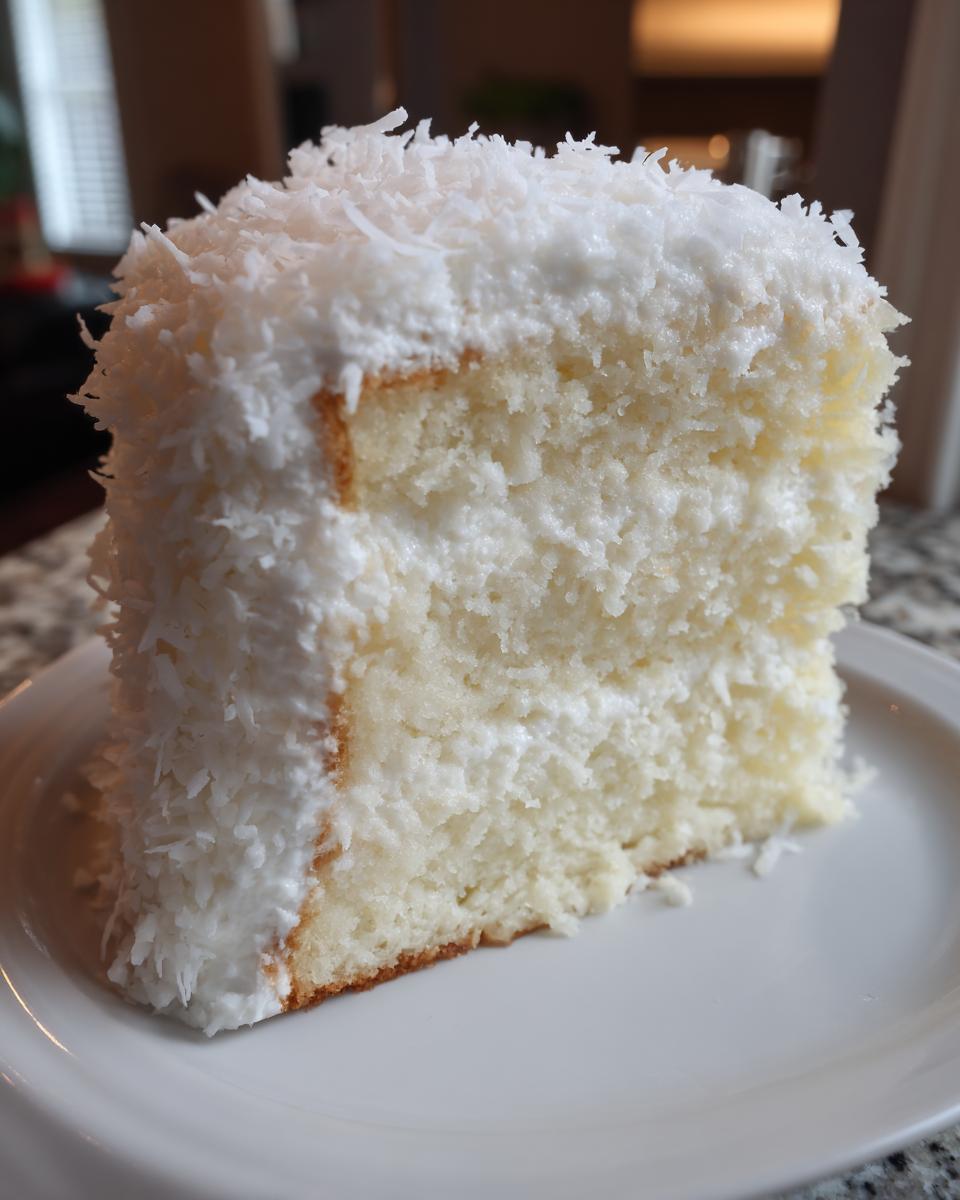
It pairs wonderfully with a strong cup of coffee—the rich roast really balances the sweetness. Or, for summer gatherings, try serving a slice alongside something tart, like fresh pineapple wedges or a light passionfruit beverage. It’s always a hit at any celebration, making it top-tier for parties. For more ideas on making memorable holiday bakes, take a look at the approach I take with moist gingerbread cake!
Frequently Asked Questions About This Coconut Dessert Recipe
I know when you’re diving into a new recipe, especially one that promises a Best homemade coconut cake experience, you’re going to have questions! That’s totally normal! I’ve tried to cover every potential hiccup because my goal is for *your* cake to turn out perfect, just like mine does. Here are some of the things folks ask me most often when trying to master this tropical treat.
What is the difference between cream of coconut and coconut milk?
Oh, this is a common sticking point, and honestly, it makes a huge difference in the final result! You cannot swap these one-for-one. Standard canned coconut milk is thin, usually unsweetened, and is used mostly for savory dishes or very light drinks. For this rich, Decadent coconut cake, we need cream of coconut—that’s the super thick, sugary stuff, often found in the mixer or international aisle (like Coco Lopez). Using regular coconut milk will make your cake way too thin and won’t give you that signature dense moisture we are aiming for.
Can I make this coconut cake recipe ahead of time?
Absolutely! I often bake the layers the day before a big event because I find it less stressful that way. However, I strongly advise against frosting them until right before serving, especially if you are using a dairy-based frosting. The best way to prep ahead for this Moist coconut cake recipe is to let the layers cool completely after the syrup soak, wrap each layer tightly in plastic wrap—like a little gift—and store them at room temperature or slightly chilled. When you’re ready to decorate, just unwrap, frost, and go!
Why do I have to use a simple syrup on this cake?
I hear you—it feels like an extra step! But remember, this isn’t just a regular cake; we want that ultra-moist finish. The syrup application is key. It’s less about adding a ton of sweetness (though it does help!) and more about locking in moisture deep into the crumb while the cake is still warm from the oven. Without that step, you risk losing some of that wonderful tenderness. If you want the most reliable, Fluffy coconut layer cake possible, don’t skip brushing on that syrup!
If you’re looking for other fun ideas for easy dessert recipes, make sure you take a peek around the site!
Nutritional Snapshot of This Decadent coconut cake
Now, I’m just a home cook, not a nutritionist, so please take these numbers as a general guide based on the main ingredients and standard measurements! This is certainly a rich dessert for celebrations, not an everyday snack, but knowing roughly what you’re working with is always handy, especially when planning for a party or a Holiday coconut cake.
- Serving Size: 1 slice
- Calories: 450
- Sugar: 45g
- Sodium: 250mg
- Fat: 25g
- Saturated Fat: 15g
- Carbohydrates: 55g
- Protein: 5g
That fat content largely comes from our required unsalted butter and the rich cream of coconut—ingredients that make this cake so incredibly delicious, so enjoy every bite! If you are ever curious about how I adjust ratios for other wonderful bakes, I talk a lot about ingredient balancing over on my easy dessert recipes page!
Share Your Experience Baking This Cake
I put my heart into testing and perfecting this coconut cake recipe so that you could bring a slice of Southern tradition right to your own table. Now that you’ve tried it, I absolutely love hearing what you think! Did it turn out fluffy enough? Did you use the cream cheese frosting or go classic?
Please take a moment to rate this recipe down below using the five-star system. Even better, drop a comment letting me know what celebration you made this gorgeous cake for—was it a birthday, a holiday gathering, or just a Tuesday that needed cheering up? Your feedback helps me connect with you and ensures that the heritage recipes I share here at MDLATDMM, like this one, continue to bring joy. You can always find out more about my philosophy on cooking and heritage on my About Page!
Nutritional Snapshot of This Decadent coconut cake
Now, I’m just a home cook, not a nutritionist, so please take these numbers as a general guide based on the main ingredients and standard measurements! This is certainly a rich dessert for celebrations, not an everyday snack, but knowing roughly what you’re working with is always handy, especially when planning for a party or a Holiday coconut cake.
- Serving Size: 1 slice
- Calories: 450
- Sugar: 45g
- Sodium: 250mg
- Fat: 25g
- Saturated Fat: 15g
- Carbohydrates: 55g
- Protein: 5g
That fat content largely comes from our required unsalted butter and the rich cream of coconut—ingredients that make this cake so incredibly delicious, so enjoy every bite! If you are ever curious about how I adjust ratios for other wonderful bakes, I talk a lot about ingredient balancing over on my easy dessert recipes page!
Share Your Experience Baking This Cake
I put my heart into testing and perfecting this coconut cake recipe so that you could bring a slice of Southern tradition right to your own table. Now that you’ve tried it, I absolutely love hearing what you think! Did it turn out fluffy enough? Did you use the cream cheese frosting or go classic?
Please take a moment to rate this recipe down below using the five-star system. Even better, drop a comment letting me know what celebration you made this gorgeous cake for—was it a birthday, a holiday gathering, or just a Tuesday that needed cheering up? Your feedback helps me connect with you and ensures that the heritage recipes I share here at MDLATDMM, like this one, continue to bring joy. You can always find out more about my philosophy on cooking and heritage on my About Page!
PrintSoft and Fluffy Southern Coconut Layer Cake Recipe
Bake a truly moist and fluffy coconut layer cake that tastes like bakery perfection. This recipe delivers tender layers and rich coconut flavor, perfect for any celebration.
- Prep Time: 30 min
- Cook Time: 30 min
- Total Time: 60 min
- Yield: 12 servings 1x
- Category: Dessert
- Method: Baking
- Cuisine: American
- Diet: Vegetarian
Ingredients
- 1 3/4 cups all-purpose flour
- 1 3/4 cups granulated sugar
- 1 tablespoon baking powder
- 1/2 teaspoon salt
- 1 cup unsalted butter, softened
- 4 large eggs
- 1 cup whole milk
- 1 teaspoon vanilla extract
- 1/2 cup cream of coconut (like Coco Lopez)
- 1 cup sweetened flaked coconut, toasted
- 1/2 cup unsweetened shredded coconut (for coating)
- 1 cup powdered sugar (for simple syrup)
- 1/4 cup water (for simple syrup)
Instructions
- Preheat your oven to 350 degrees F. Grease and flour three 8-inch round cake pans. Line the bottoms with parchment paper rounds.
- In a large bowl, whisk together the flour, sugar, baking powder, and salt.
- Add the softened butter to the dry ingredients. Beat with an electric mixer on low speed until the mixture resembles coarse crumbs.
- In a separate bowl, whisk together the eggs, milk, vanilla extract, and cream of coconut until combined.
- Gradually add the wet ingredients to the dry ingredients, mixing on medium speed until the batter is smooth. Do not overmix.
- Gently fold in the toasted flaked coconut.
- Divide the batter evenly among the prepared cake pans.
- Bake for 25 to 30 minutes, or until a wooden pick inserted into the center comes out clean.
- While the cakes cool slightly, prepare the simple syrup by heating the powdered sugar and water until the sugar dissolves.
- Once the cakes are slightly cooled in the pans (about 10 minutes), poke holes over the tops using a skewer. Brush the warm simple syrup evenly over the tops of the warm cake layers.
- Let the cakes cool completely on wire racks.
- Once cool, frost the layers with your preferred coconut cream cheese frosting (recipe not included here, but recommended for a decadent coconut cake).
- Press the unsweetened shredded coconut onto the sides and top of the finished cake.
Notes
- Toasting the flaked coconut enhances the depth of flavor in your cake. Spread it on a baking sheet and bake at 350 degrees F for 5-8 minutes, watching closely to prevent burning.
- For extra moisture, use buttermilk instead of whole milk in the batter.
- This recipe works well as a layer cake, but you can adapt it for a Bundt cake by increasing the baking time.
Nutrition
- Serving Size: 1 slice
- Calories: 450
- Sugar: 45g
- Sodium: 250mg
- Fat: 25g
- Saturated Fat: 15g
- Unsaturated Fat: 10g
- Trans Fat: 0g
- Carbohydrates: 55g
- Fiber: 2g
- Protein: 5g
- Cholesterol: 100mg