

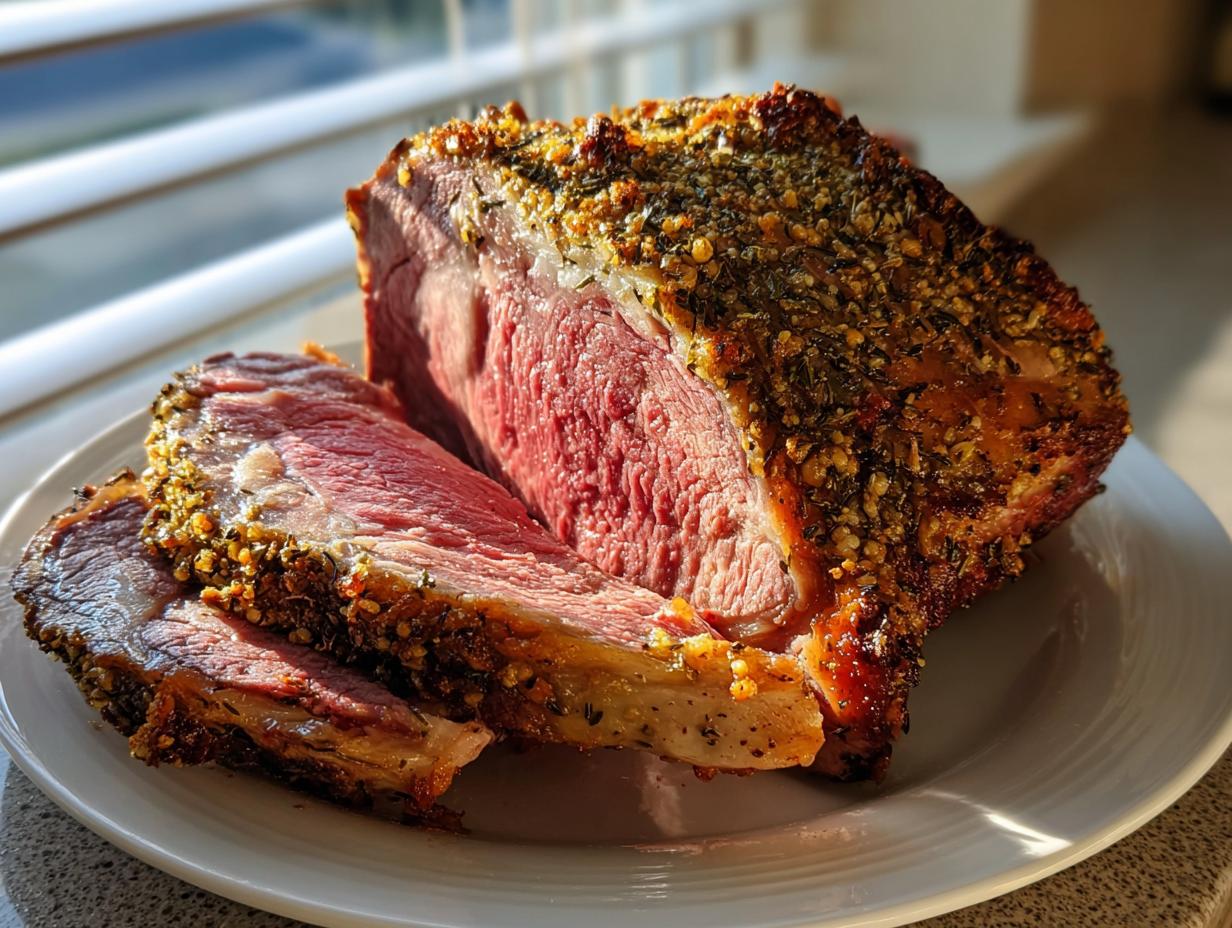
If I hear one more person shudder when you mention cooking a **prime rib** roast for a big holiday dinner, I might just scream! It sounds so intimidating, right? Like something reserved only for professional chefs or people whose Thanksgiving dinner table seating chart requires a floor plan. Well, that ends today. I’m Maddie, and like many of you, my culinary education came from instinct and handwritten notes passed down through generations. That’s why I’ve poured my heart into refining this method. This is The Ultimate ‘Fool-Proof’ Garlic Herb Crusted Prime Rib Roast (Oven Method). I don’t deal in vague ‘pinches’ here; I give you clear steps so you can conquer that beef and serve up the most tender, show-stopping centerpiece meat you’ve ever made.
- Why This Garlic Herb Prime Rib Recipe Works Every Time
- Gathering Ingredients for Your Prime Rib
- How to Prepare the Garlic Herb Paste for Your Prime Rib
- Step-by-Step Instructions: Oven Roasted Prime Rib
- Achieving Perfect Doneness on Your Prime Rib Roast
- Making Simple Prime Rib Au Jus from Drippings
- Tips for Success with Your Holiday Roast Beef Prime Rib
- Storing and Reheating Leftover Prime Rib
- Frequently Asked Questions About Cooking Prime Rib
- Share Your Perfect Prime Rib Roast Experience
Why This Garlic Herb Prime Rib Recipe Works Every Time
Look, I get it. Cooking a three-rib roast feels like a high-stakes situation. But this recipe is designed to remove all the guesswork, which is why I call it fool-proof! The reliability comes from two main things: a flavor bomb crust and a highly reliable roasting technique. We aren’t relying on guesswork; we’re relying on temperature, which means you get a **Juicy Prime Rib** that is unbelievably tender every single time you try it.
What makes this **Tender Beef Roast** so great? Check out the secrets here:
- We build flavor instantly with that robust garlic and herb paste that adheres perfectly to the meat.
- We use a two-temperature sear-then-roast method that locks in the juices fast before gently bringing it up to temp.
- The simple salt and pepper base lets the rosemary and thyme truly shine without masking the flavor of the beef itself.
If you want more inspiration on easy, flavor-packed beef like this, check out my quick beef and broccoli on days when you don’t have four hours to dedicate to a roast!
The Importance of Resting for a Perfect Prime Rib Roast
Now, listen closely, because this part is non-negotiable if you want meat that melts in your mouth. Once the roast comes out of the oven, you absolutely must tent it loosely with foil and leave it alone for at least 20 minutes. Seriously, step away! During this time, the muscle fibers, which tightened up while cooking, begin to relax and reabsorb all those delicious juices.
If you cut it too soon, all the moisture rushes out onto the cutting board, leaving you with dry edges. Resting also lets the internal temperature continue to rise gently—that’s carryover cooking—ensuring it hits that sweet spot of perfection without ever going past medium.
Gathering Ingredients for Your Prime Rib
Before we get that oven preheating, we need to talk about what you’re assembling. Remember, I’m all about making this an **Easy Prime Rib Recipe**, but that doesn’t mean we skimp on quality or clarity when it comes to the ingredients themselves. For this show-stopping **Centerpiece Dinner**, you need precision. I need you to look for an unambiguous **Standing Rib Roast**, specifically a nice, hefty 5 to 7-pound roast that is bone-in. That fat cap and the bones add so much protection and flavor!
Here are the components we’ll be using to create that amazing crust. Don’t rush this part; having everything measured out and ready is half the battle.
- 1 (5-7 pound) bone-in prime rib roast (standing rib roast)
- 4 tablespoons olive oil
- 6 cloves garlic, minced
- 2 tablespoons fresh rosemary, chopped
- 1 tablespoon fresh thyme leaves
- 1 tablespoon coarse salt
- 1 teaspoon black pepper
- 1 teaspoon onion powder
If you’re looking for other great beef dishes to serve alongside this magnificent main course, you absolutely must check out my beef enchilada casserole for a totally different kind of comfort!
Ingredient Notes and Substitutions for Your Prime Rib
Since buying a huge roast can be a big investment, let’s make sure we get the details right. If you absolutely cannot find fresh rosemary, dried is okay, but you’ll need to cut that amount down drastically—maybe just one teaspoon of dried instead of two tablespoons chopped fresh. Trust me, fresh herbs are worth the extra trip, though!
Also, about that salt! I specify coarse salt here, like kosher salt. Fine table salt packs down too hard when you rub it on, sometimes making the crust overly salty in spots. We want a nice, even coverage. And while bone-in is my absolute favorite for texture, if you sourced a boneless roast, that’s fine, but you will need to slightly reduce your overall roasting time.
How to Prepare the Garlic Herb Paste for Your Prime Rib
This paste is what’s going to give our **prime rib** that crispy, savory armor! It’s so simple, but it’s the secret to waking up the meat before it even sees the oven. Grab a small bowl—nothing fancy—and toss in all those aromatic elements: your minced garlic, the chopped rosemary and thyme, the salt, pepper, and onion powder. Drizzle in that olive oil. Then, use a fork and just mash everything together until you have a thick, fragrant green-and-white paste. Don’t overthink it; just make sure all the herbs are coated in that oil.
Step-by-Step Instructions: Oven Roasted Prime Rib
Okay, the oven is preheated, the paste is made, and your beautiful roast is ready to go. This is where we put the “fool-proof” into action. First thing first: that roast needs to relax! Take the **prime rib** out of the fridge a good two or three hours before you plan to cook it. Cold meat hitting a hot oven is how you get that ugly gray band right under the surface. While that’s happening, crank your oven up to 450 degrees Fahrenheit. Yes, really hot!
Once it has rested on the counter, grab some paper towels and pat the entire outside surface of that roast dry. Any moisture on the outside turns to steam, and we want a crust, not soggy beef! Then, take that garlic herb paste we just mixed up and rub it everywhere. Really press it in so it sticks tight. Place the roast bone-side down on a rack inside your roasting pan.
Here comes the magic sear! Put the roast in that hot 450°F oven, and let it blast away for exactly 15 minutes. This starts building that gorgeous crust we love. After those 15 minutes are up, immediately drop the temperature down to 325 degrees Fahrenheit. Don’t peek or open the door while you adjust it!
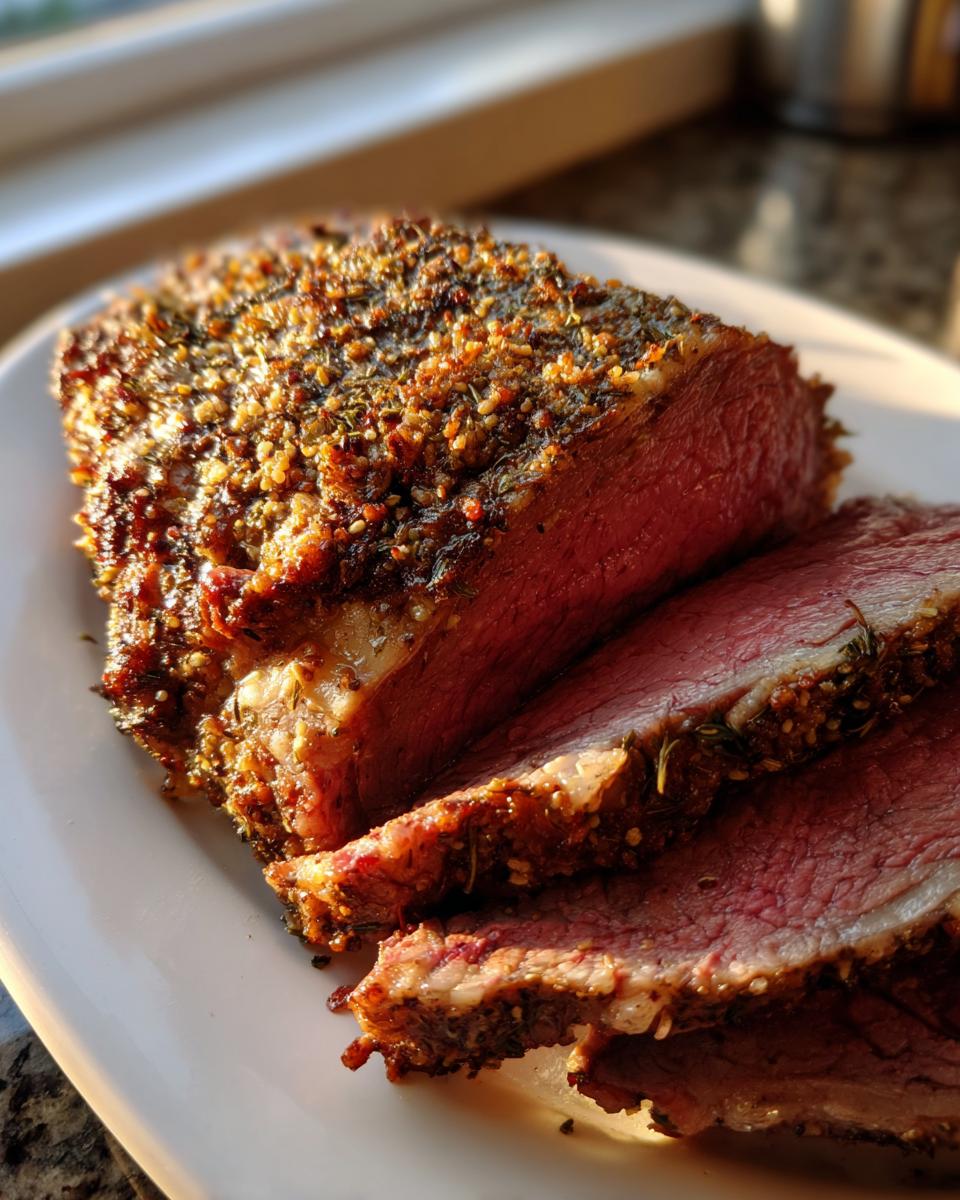
Now, the cooking phase is all about patience and your thermometer. You’re going to roast it slowly at 325°F until you hit your target internal temperature—and for us, that target is always aiming for a perfect **Medium Rare Prime Rib**. You’ll want to check it frequently, pressing the thermometer into the thickest part, making sure you miss that big bone underneath for an accurate reading. If you’re using reliable guides like the ones you can find here for temperature comparison, you’ll know you’re done when it reads 125°F to 130°F.
The final and most important step: pull it out of the oven immediately when it hits that temperature mark. Tent it very loosely with foil—don’t wrap it tight, or the crispy crust will steam off! Let it sit for a minimum of 20 minutes. This rest lets all the juices redistribute, resulting in the juiciest bite imaginable. While it’s resting, that’s the perfect window to whip up a quick simple pan gravy or start that amazing au jus using the drippings at the bottom of that pan!
Achieving Perfect Doneness on Your Prime Rib Roast
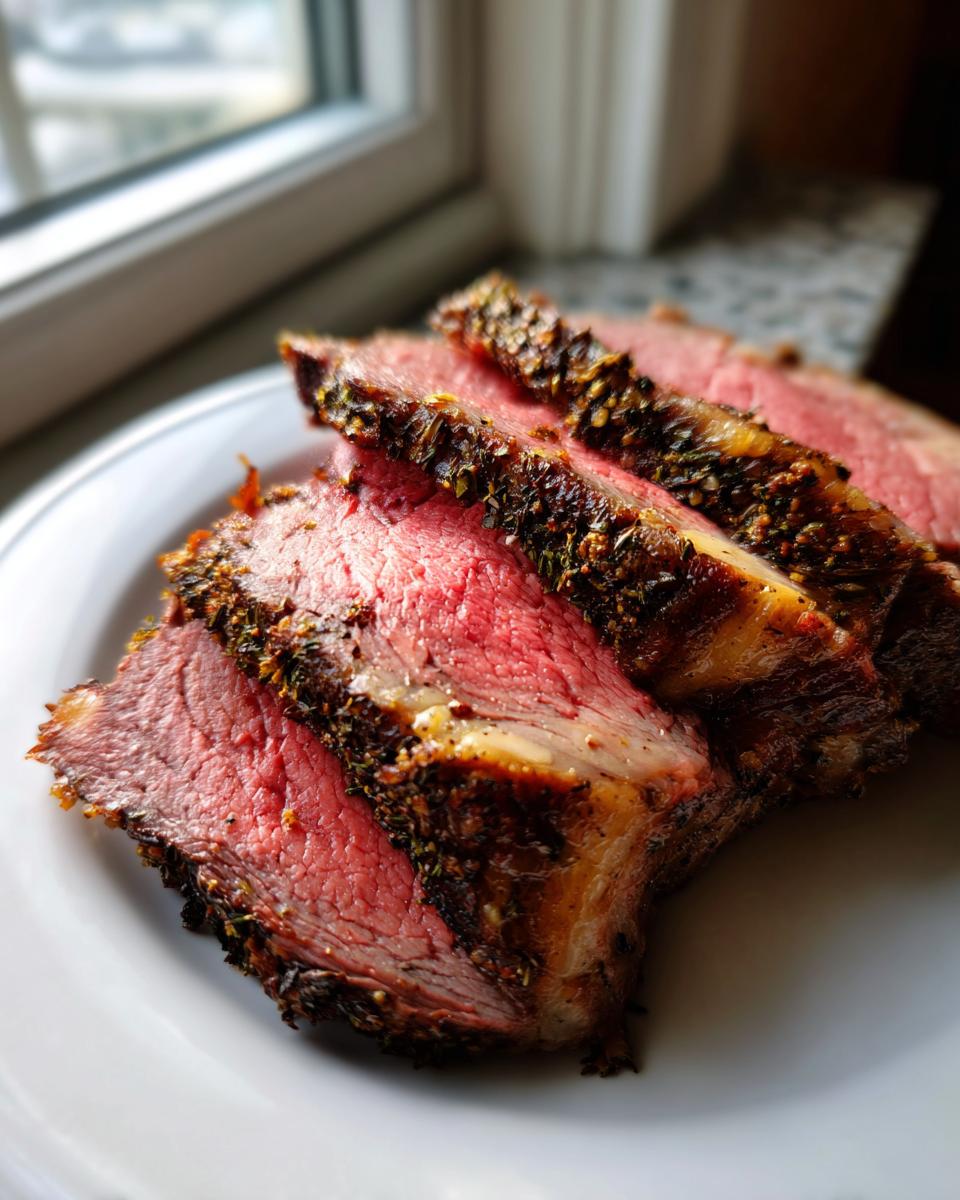
Out of all the things one worries about when making a **prime rib**, the temperature is usually at the top of the list. We are aiming for that magical, tender, pink center, which means we are gunning for **Medium Rare Prime Rib**, almost every time! If you treat this roast like a weeknight chicken breast, you’re going to end up with something gray and chewy, and honestly, that’s just wasteful when you pick out a beautiful standing rib roast.
The key here is to respect the meat and trust the thermometer over the clock. Cooking timelines are just suggestions because every roast is slightly different—it depends on the fat cap, whether it was out of the fridge long enough, and even the shape of your specific roast. Here is my personal cheat sheet for the temperature you need right before you pull it out of the oven (remember, it keeps cooking while it rests!):
- Rare: 120°F – 125°F
- Medium-Rare (My Favorite!): 125°F – 130°F
- Medium: 135°F – 140°F
If you pull it out at 130°F, it might reach 138°F while resting, which is perfect medium territory. If you try to judge by sight alone, you’re rolling the dice, and with a piece of beef this special, we need reliability. For more detailed timing specifics, I put together a whole guide on roast beef cooking times that you can reference any time before you start pulling out those beautiful holiday cuts.
Using a Meat Thermometer for Your Prime Rib
If there is one piece of equipment I insist you invest in for this recipe—or really, any large roast cooking—it’s a high-quality, fast-reading meat thermometer. Don’t rely on those pop-up timers that come stuck in the meat; they just aren’t accurate enough for this caliber of cooking!
When you check the temperature, you need to aim for the absolute thickest part of the meat. This isusually the center of the roast, far away from any bones or the outer crust we worked so hard on. And this is critical: gently angle the probe so it sits squarely in the center of the meat without touching the bone underneath. Bones heat up differently than the meat itself, and if your thermometer is reading against the bone, you’ll get a falsely high reading and overcook the rest of your beautiful roast!
Making Simple Prime Rib Au Jus from Drippings
You’ve got this gorgeous, glistening pan full of flavorful drippings after you pull that magnificent **prime rib** out to rest—don’t you dare pour that liquid gold down the drain! A fancy gravy takes time you just don’t have. What you need is a quick, savory **Prime Rib Au Jus**, and it takes about five minutes using what’s left in that roasting pan. It’s the easiest gravy replacement you’ll ever make, and honestly, a succulent roast like this deserves nothing more than its own rich juices.
Here is the whole, simple method: Once the roast is safely resting under foil, place your roasting pan over medium-low heat on your stovetop. Use a large spoon or a fat separator to skim off as much excess fat as you can into a separate container. We want the flavor, not globs of grease! What’s left is concentrated beef flavor.
Next, add a splash of liquid—about a cup of water, low-sodium beef broth, or even a dry red wine if you have it handy. Bring that up to a simmer, scraping up all those browned, flavorful bits stuck to the bottom of the pan. Let that simmer for about five minutes until it reduces slightly and thickens just a touch. That’s it! You’ve got authentic, flavorful au jus perfect for spooning over those carved slices. If you wanted to try a different kind of sauce entirely, I have an amazing recipe for creamy black pepper gravy that works beautifully too. But for this roast, the au jus is king. For an even more detailed look at taking those drippings to the next level, you can check out this guide on making a quick au jus.
Tips for Success with Your Holiday Roast Beef Prime Rib
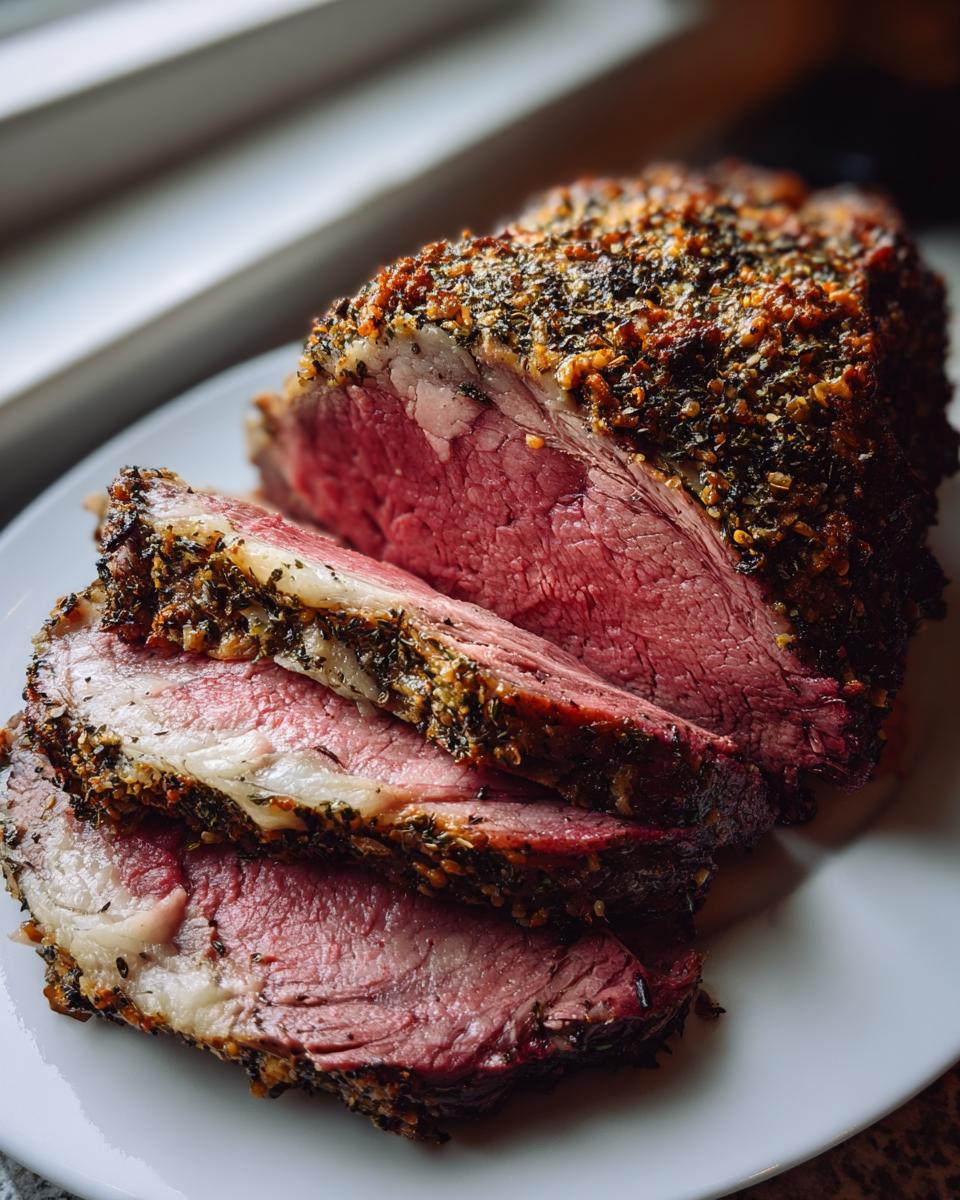
We’ve gone over the main steps now, but since this is such a special **prime rib**, I want to give you a few extra little tips gleaned from years of trial and error. These small adjustments are what separate a good roast from the kind of **Holiday Roast Beef** that people talk about until next Christmas! These aren’t complicated; they are just about paying attention to the details.
Here are the secrets I always swear by:
- Let It Get Cozy: I can’t stress this enough—room temperature meat! If you think your roast has rested long enough on the counter, let it sit five more minutes. A cold center means you have to cook longer, which inevitably dries out the outer layers. We want that even cook!
- The Crust Crunch Touch: If you followed the recipe and pulled the roast out at 130°F but you still want a super golden, almost brittle crust on top, don’t panic. Right after you pull the roast out, if you have a minute before you tent it, move your oven rack up high and switch the broiler on high. Place the bare roast (no foil yet!) under the broiler for just 60 to 90 seconds. Watch it like a hawk, though! It goes from golden to charcoal in about three seconds flat!
- Don’t Fear the Bone: A bone-in roast is technically a **Standing Rib Roast**, and those bones are insulating your meat! They help protect the meat closest to them from overcooking, which generally results in a more uniformly cooked roast. Trust the bone to help you achieve that perfect texture.
If you’ve nailed the roast, you have to have the perfect sides, right? I love pairing this with my favorite holiday stuffing recipe. And if you are looking for other ways people make their Christmas centerpiece truly shine, take a peek at what others are doing over at this delicious-looking site for more inspiration!
Storing and Reheating Leftover Prime Rib
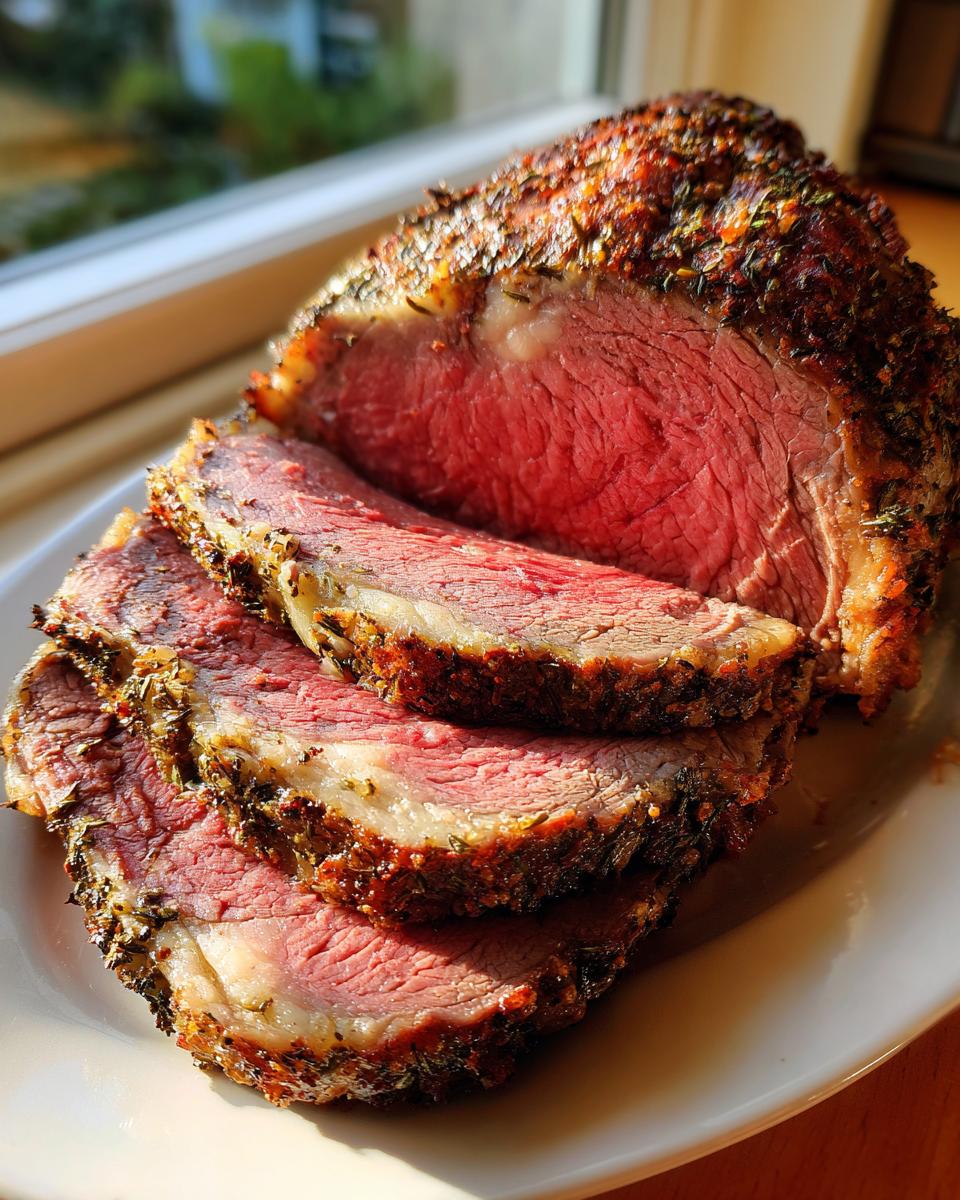
Oh my gosh, leftover roast! It’s almost as good as the first night, provided you don’t ruin it during reheating. If you were sensible—and I know you were, because you made my recipe—you should have plenty of magnificent beef left over. Don’t just throw it in the fridge uncovered; we need a plan to keep that precious juiciness intact for sandwiches, salads, or even a quick weeknight dinner.
First, make sure you carve off any remaining slices you know you’ll eat within the next couple of days and keep those separate from the main chunk of meat. For best results, try to keep the meat on the bone if possible for the first day or two; it acts like a little protective shield against drying out.
Pop everything into an airtight container. I find that laying slices flat, perhaps interleaved between a sheet of parchment paper if you have a massive amount, works really well. It should stay fresh and delicious in the refrigerator for about three to four days. If you know you won’t get to it by Wednesday, chop it up and freeze it!
When it comes to reheating, this is where most people mess up their perfectly cooked roast. Never throw slices in the microwave uncovered; that turns great beef into shoe leather instantly. For a couple of slices, I recommend gently warming them in a very low oven—think 250°F—or even better, adding them to a pan with just a splash of broth or water and covering the pan tightly, just enough to warm them through in their own little steam bath.
If you’re looking for a totally unexpected way to use up those leftovers that doesn’t involve a sad sandwich, you have to try making my crockpot French onion soup. Those thinly sliced bits of beef melt right into the broth and make the whole thing taste unbelievably layered and rich. It’s my favorite trick for extending the holiday magic!
Frequently Asked Questions About Cooking Prime Rib
I know you might still have a few nagging worries floating around in your head before you put that beautiful roast in the oven. That’s totally normal, especially when you’re trying to nail that perfect **Centerpiece Dinner**! Since my goal is to make this the most **Easy Prime Rib Recipe** you try all year, let me tackle the few questions I hear most often about getting that guaranteed medium-rare result.
What cut of beef is best for this roast?
Hands down, you want a Standing Rib Roast, also known as a Ribeye Roast. That name refers to the set of ribs still attached to the meat. My recipe calls for a bone-in cut because those bones act like natural insulators, keeping the meat closest to them from overcooking too fast. If you can only find boneless, that’s okay, but remember you’ll likely need to shave about 15 to 25 minutes off the total cooking time.
Do I really need to sear it at 450°F?
Yes, you do! I know it feels counterintuitive to start blazing hot when the end goal is a gentle 325°F roast, but that initial 15-minute blast at 450°F is crucial for developing what we in the business call the Maillard reaction—that’s just a fancy way of saying it creates a deeply browned, flavorful crust. This high heat locks in the surface juices right away, setting the stage for that wonderfully tender interior. Don’t skip those first 15 minutes!
How long should a 6lb roast take at 325°F?
Timing is the trickiest part because every roast is unique, but generally, for a 6-pound bone-in **oven roasted prime rib** cooked at 325°F, you are looking at roughly 1 hour and 45 minutes to 2 hours total roasting time *after* that initial 15-minute sear. However, stop looking at the clock and start looking at the thermometer! For medium-rare, you need to pull the roast out when the thickest part hits 125°F to 130°F, because it will keep rising while it rests. You can check out a more detailed chart for different weights over at this Christmas inspiration site, but remember—the thermometer is law!
Can I use dried herbs instead of fresh for the paste?
You certainly can use dried herbs if that’s all you have, but you must drastically reduce the amount because dried herbs are much more concentrated. If the recipe calls for two tablespoons of fresh rosemary, start with only one teaspoon of dried rosemary. Fresh rosemary and thyme are truly what make this garlic herb paste pop, though, so I always encourage a quick trip to the produce aisle if you can manage it! If you’re looking for some easy side dishes to go with your main event, my easy cornbread recipe is always a winner.
Share Your Perfect Prime Rib Roast Experience
I am so genuinely thrilled that you took the plunge and made this **prime rib**! Honestly, seeing your beautiful roasts pop up in my feed is my favorite part of being a home cook sharing recipes online. You put in the work, managed that temperature, and now you deserve all the praise for bringing such a magnificent **Perfect Prime Rib Roast** to your table.
Now that you’ve rested it and carved into that juicy center, I would absolutely love to hear all about it! Did you hit that sweet spot of medium-rare? Did the garlic herb crust stay perfectly crisp? Don’t be shy; your feedback helps me and other cooks trust this method even more.
Please leave a star rating right here in the comments below and tell me your biggest takeaway from the process. Were you surprised by how easy it was? If you snapped a picture of that gorgeous carving moment, please share it! You can tag me on social media, or just mention it in the comments so I can celebrate your success.
If you’re curious to know a little bit more about my own journey from stressful holiday cooking to this calm, reliable method, you can always read about my story and philosophy here. Happy feasting, and thank you for trusting me with your big holiday roast!
PrintThe Ultimate Fool-Proof Garlic Herb Crusted Prime Rib Roast
Follow this simple oven method to cook a juicy, tender prime rib roast with a flavorful garlic herb crust every time. This recipe is perfect for your holiday centerpiece.
- Prep Time: 20 min
- Cook Time: 120 min
- Total Time: 140 min
- Yield: 6-8 servings 1x
- Category: Main Course
- Method: Oven Roasting
- Cuisine: American
- Diet: Low Fat
Ingredients
- 1 (5-7 pound) bone-in prime rib roast (standing rib roast)
- 4 tablespoons olive oil
- 6 cloves garlic, minced
- 2 tablespoons fresh rosemary, chopped
- 1 tablespoon fresh thyme leaves
- 1 tablespoon coarse salt
- 1 teaspoon black pepper
- 1 teaspoon onion powder
Instructions
- Remove the prime rib roast from the refrigerator 2 to 3 hours before cooking to allow it to come closer to room temperature. Preheat your oven to 450 degrees Fahrenheit.
- In a small bowl, combine the minced garlic, rosemary, thyme, salt, pepper, and onion powder with the olive oil to create a paste.
- Pat the entire surface of the roast dry with paper towels. Rub the garlic herb paste evenly over the entire roast, pressing it firmly onto the meat.
- Place the roast, fat side up, in a roasting pan fitted with a rack.
- Roast at 450 degrees Fahrenheit for 15 minutes.
- Reduce the oven temperature to 325 degrees Fahrenheit. Continue roasting until the internal temperature reaches your desired doneness. Use a meat thermometer inserted into the thickest part of the roast, avoiding the bone.
- For medium-rare (recommended), remove the roast when the internal temperature reads 125 to 130 degrees Fahrenheit.
- Remove the roast from the oven, tent it loosely with aluminum foil, and let it rest for at least 20 minutes before carving. The internal temperature will rise about 5 to 10 degrees during resting.
- Carve the roast between the bones for serving. Make your Prime Rib Au Jus using the drippings while the roast rests.
Notes
- For the best results and a truly juicy prime rib, use a reliable meat thermometer.
- If you prefer a crispier crust, you can briefly place the roast under the broiler for the last few minutes, watching closely to prevent burning.
- Resting time is crucial; do not skip this step to keep your roast tender.
Nutrition
- Serving Size: 6 oz cooked meat
- Calories: 450
- Sugar: 0
- Sodium: 350
- Fat: 30
- Saturated Fat: 12
- Unsaturated Fat: 18
- Trans Fat: 0
- Carbohydrates: 0
- Fiber: 0
- Protein: 40
- Cholesterol: 120